
Film History
The Nitrate Fever Dream: Why Silent Era Transgressions Still Haunt the Midnight Mindset
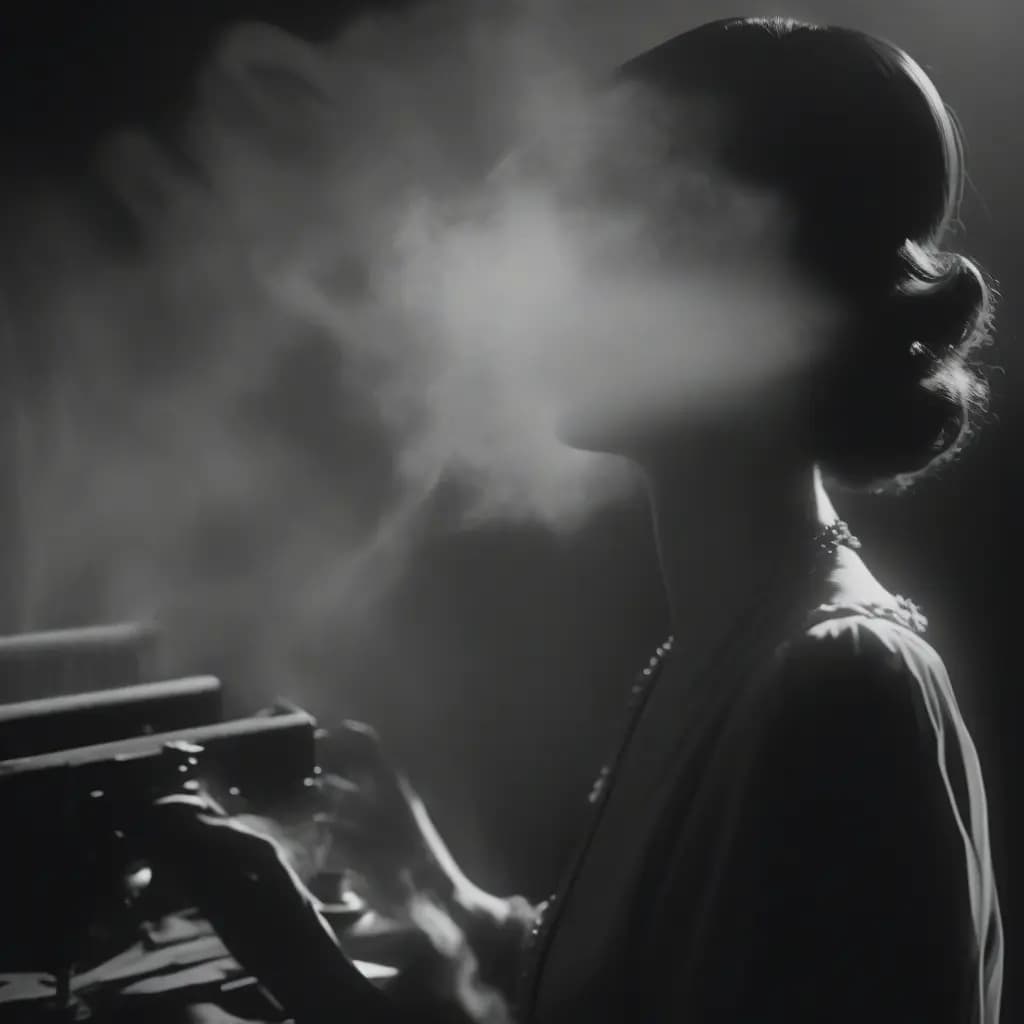
“Before the midnight movie was a marketing category, the silent era’s outcasts and taboo-breakers were already scripting the DNA of cinematic obsession.”
There is a persistent, lazy myth that the history of film is a linear climb from primitive innocence to sophisticated darkness. We like to imagine that the 'cult' sensibility—that specific brew of the transgressive, the weird, and the defiantly non-mainstream—only crawled out of the gutter in the late 1960s. But if you spend enough time in the nitrate-soaked archives of the 1910s and 20s, you realize that the underground was born long before the first midnight screening of a talking picture. The seeds of our modern obsession with the fringe were sown in the flickering, unregulated shadows of the silent era, where directors were experimenting with visual anarchy and social taboos that would make a modern provocateur blush.
To understand the modern midnight mindset, one must look at the outliers of the silent screen—the films that refused to behave, the narratives that embraced the grotesque, and the visual experiments that prioritized atmosphere over the rigid demands of a burgeoning industry. These weren't just 'old movies'; they were the first manifestations of a devotional cinema, works that demanded a specific kind of viewer who was willing to stare into the abyss of the frame and find something beautiful, terrifying, or utterly bizarre.
The Architecture of Desire and Destruction
One of the primary pillars of the fringe experience is the subversion of social norms, particularly those surrounding power and desire. Take, for instance, the 1920 production of The Woman and the Puppet. While the title suggests a simple moral fable, the film—based on Pierre Louÿs' scandalous novel—is a searing exploration of masochistic obsession. Don Mateo, the swaggering Spaniard, thinks he can control the tempestuous Concha Perez, only to find himself dismantled by her whims. This is not the polite romance of the mainstream; it is a blueprint for the 'fatal attraction' narratives that would later populate the darker corners of genre film.
In these early works, the camera wasn't just a recording device; it was a voyeuristic tool. The obsession with the 'fallen' woman or the 'corrupted' man provided a fertile ground for what would become the 'exploitation' aesthetic. In The Naked Truth (1914), we see the painter Pierre Bernier become famous through his portrait of the model Lolette. The film navigates the intersection of art, fame, and the 'scandalous' body, a theme that remains a cornerstone of underground cinema. These films dared to ask: what happens when the gaze becomes a weapon? It’s a question that still resonates in every frame of a modern transgressive masterpiece.
Visual Surrealism Before the Manifesto
Before André Breton ever put pen to paper to define Surrealism, the silent screen was already operating in a state of dream-logic. The technical limitations of the era—double exposures, hand-tinting, and forced perspectives—actually served to enhance the 'otherworldliness' that modern fans crave. A prime example is the short fantasy Sea of Dreams (1922). This wasn't a film concerned with the mundane realities of the post-war world; it was a series of 'beautiful paintings' representing a city beyond the skies. It utilized the medium to explore a 'dream narrative' of doubt and fantasy, predating the avant-garde movements of the late 20s.
This visual experimentation is a key element of the 'cult' appeal. When we watch a film like Under galgen (1914), with its focus on fortune tellers and the haunting atmosphere of impending doom, we are seeing the birth of the 'mood piece.' These films didn't always need a coherent three-act structure; they needed a vibe, a texture, and a willingness to let the image do the heavy lifting. The 'city beyond the skies' in Sea of Dreams is the spiritual ancestor to the neon-drenched dystopias and gothic dreamscapes that define the visual language of the fringe today.
Propaganda, Extremity, and the 'Beast' of Berlin
Cult cinema has always had a complicated relationship with the extreme. Sometimes that extremity comes from a place of artistic rebellion, and other times it comes from the sheer, unadulterated madness of the era's politics. The Kaiser, the Beast of Berlin (1918) is a fascinating artifact in this regard. Released during the height of World War I, it is a piece of propaganda so feverish and over-the-top that it transcends its original purpose and becomes a proto-exploitation film. It presents Kaiser Wilhelm not as a political figure, but as a literal monster of 'political greed.'
The true power of the fringe lies in its ability to take the 'unacceptable'—whether it be a political ideology, a social taboo, or a visual aberration—and transform it into a focal point of intense, almost religious devotion.
Watching these films today requires a shift in perspective. We aren't just looking at 'history'; we are looking at the raw, unpolished energy of a medium that didn't yet know its own boundaries. The 'Beast of Berlin' is the grandfather of the 'video nasty,' a film designed to provoke a visceral, emotional reaction through caricature and extremity. This is the same impulse that drives people to seek out banned films or 'lost' reels—the desire to see something that was never meant to be 'polite' or 'safe.'
The Circus, the Outcast, and the Misfit Archetype
If there is one setting that perfectly encapsulates the 'cult' spirit, it is the circus. From Tod Browning’s Freaks to the neon-noir of modern indie horror, the circus represents a space where the rules of polite society do not apply. This fascination began early with films like The Man Tamer (1921). Here, a young woman becomes a lion tamer—a role that immediately places her outside the traditional domestic sphere of the 1920s. She is an outlier, a woman who commands beasts while navigating the predatory 'manager' and the 'playboy' son.
Similarly, Circus Days (1923) uses the orphan-on-the-run trope to explore the circus as a place of refuge and danger. These narratives established the 'misfit' as the ultimate cinematic hero—the person who doesn't fit into the 'small town' or the 'Fifth Avenue millinery store' and must instead find their way in the fringes of society. Whether it’s the 'lion tamer' or the 'lemonade boy,' these characters are the archetypal ancestors of the punks, goths, and rebels who would later populate the midnight movie circuit.
Mute Witnesses: The Power of the Silent Gaze
The term 'Mute Witness'—taken from the 1914 film Mute Witnesses—is perhaps the best way to describe the experience of watching these silent outliers. In that film, a servant girl agrees to take another's place, becoming a silent observer of the household's secrets. This is exactly what the viewer of a 'cult' film becomes: a witness to something hidden, something 'other.' The lack of synchronized sound in these early films didn't just remove dialogue; it added a layer of haunting abstraction. It forced the viewer to engage more deeply with the visual composition, the lighting, and the physical performance.
Consider the sheer variety of these 'witnessed' experiences in the early fringe:
- The political brutality of A Fight for Freedom; or, Exiled to Siberia (1912), which depicted the suffering of prisoners in the snow with a visceral realism.
- The psychological 'gift' in Old Brandis' Eyes (1917), where an artist gains the ability to see into the hearts of others, revealing the rot beneath the surface.
- The opium-smuggling underworld of McGuire of the Mounted (1923), blending crime drama with the 'drugging' and 'framing' tropes that would become staples of the noir genre.
- The 'peculiar' obsessions of Peculiar Pets, documenting those who live with animals that could 'seriously injure or even kill' them—the ultimate proto-documentary of the eccentric.
The Eternal Nitrate Afterlife
Why do these films still matter? Because they remind us that the 'cult' experience is not a modern invention, but a fundamental part of the cinematic soul. The desire to see the unseen, to celebrate the strange, and to find beauty in the transgressive is as old as the camera itself. When we watch a silent film today, we are engaging in a form of cinematic archaeology. We are digging through the 'nitrate fever dream' to find the moments where the medium first broke its chains.
The directors of the 1910s and 20s were the original genre rebels. They didn't have a century of film theory to guide them; they had instinct, a bit of nitrate, and a willingness to explore the dark corners of the human condition. Whether it was the obsessive masochism of The Woman and the Puppet or the surrealist fantasies of Sea of Dreams, these films established a legacy of rebellion that continues to inspire every filmmaker who chooses the fringe over the center. The shadows of the silent era aren't just fading memories; they are the vibrant, flickering heartbeat of everything we love about the midnight movie.
Community
Comments
Log in to comment.
Loading comments…