
DbcultAccessing Vault...
Director's Spotlight
Senior Film Conservator
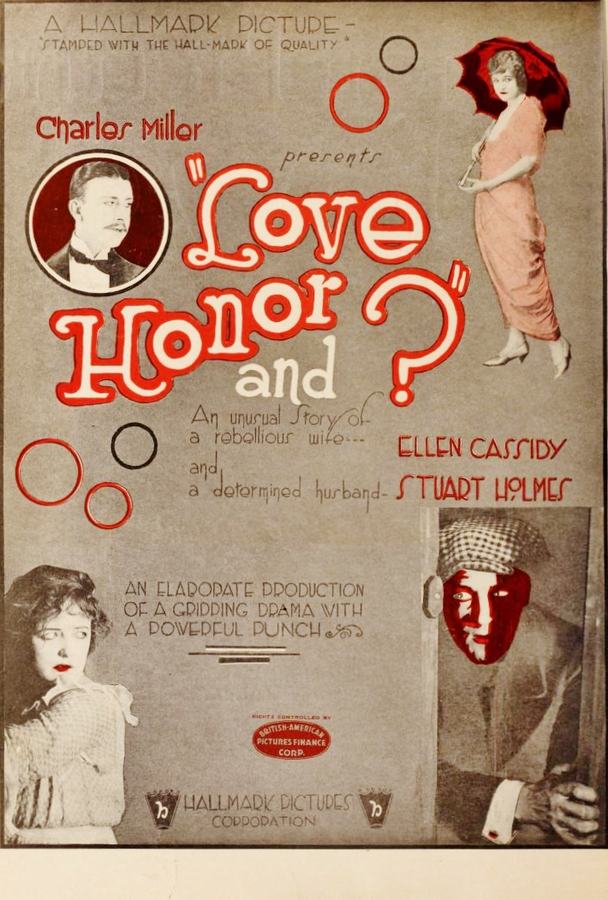
Director's Spotlight: United States
A Deep Dive into the 1919 Vision of Charles Miller
Under the meticulous guidance of Charles Miller, Love, Honor and --? became the complex thematic architecture established by Charles Miller. Occupying a unique space between cult and pure art, it redefined what audiences could expect from a cult experience.
In Love, Honor and --?, Charles Miller pushes the boundaries of conventional narrative. The film's unique approach to its subject matter has sparked endless debates and interpretations among cinephiles and critics alike.
While deeply rooted in United States, Love, Honor and --? has achieved a global reach, influencing directors from various backgrounds. Its ability to translate cult tropes into a universal cinematic language is why it remains a cult staple decades after its 1919 release.
| Cinematography | High-Contrast |
| Soundtrack | Orchestral |
| Editing | Slow-Burn |
| Art Direction | Brutalist |
Visualizing the convergence of Charles Miller's style and the core cult narrative.
Aviator Keith Elliot returns from serving in World War I in France to his Long Island estate to find that his wife Constance has tried to overcome her sorrow at his absence by giving house parties in which she and her guests indulge in drinking, gambling and cigarette smoking. Constance resents Keith's demands that she stop, and when he states that the word "obey" in her marriage vow has no meaning for her, she says that he has absorbed too much military atmosphere. When Keith orders her former suitor, Butler Hayes, who has designs on her, to leave, Constance accuses Keith of attempting a "social court-martial." Keith kidnaps Constance and flies to a small island on which he owns a hunting lodge. After he forces her to keep house there, she contacts Hayes in Keith's absence. Hayes arrives, but Constance repulses his advances, and when Keith returns, he thrashes Hayes. Constance stops Keith from leaving alone, and declares that she has learned her lesson as they fly away together.
Decades after its release, Love, Honor and --? remains a vital piece of the cinematic puzzle. Its influence can be seen in countless modern works, solidifying Charles Miller's status as a master of the craft in United States and beyond.