
DbcultAccessing Vault...
Director's Spotlight
Senior Film Conservator
Director's Spotlight: United States
A Deep Dive into the 1935 Vision of Charles Vidor
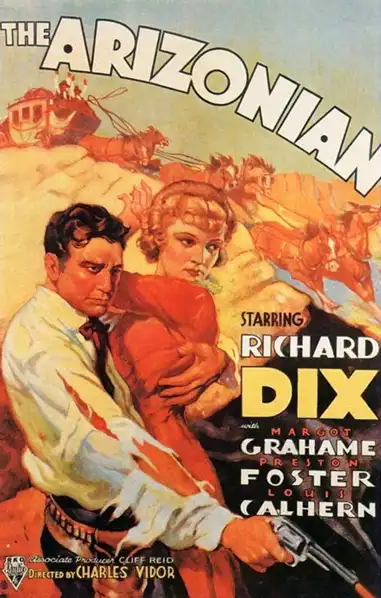
The artistic breakthrough represented by The Arizonian in 1935 highlights the uncompromising vision of Charles Vidor that defines this Drama masterpiece. In the context of United States's rich cinematic history, it captures a specific kind of cinematic magic that is rarely replicated.
In The Arizonian, Charles Vidor pushes the boundaries of conventional narrative. The film's unique approach to its subject matter has sparked endless debates and interpretations among cinephiles and critics alike.
| Cinematography | Static |
| Soundtrack | Orchestral |
| Editing | Invisible |
| Art Direction | Kitsch |
Visualizing the convergence of Charles Vidor's style and the core Drama narrative.
In a film where the leading character is a composite of several American-frontier lawmen (mostly Wyatt Earp,) Clay Tallant comes to Silver City, Arizona in the 1880s and encounters wide-spread lawlessness and disorder, unscrupulous politicians, outlaws galore and brow-beaten citizens. He accepts the position of town marshal and, with his brother and a reformed outlaw , Tex Randolph, who comes over to his side, sets out to bring law-and-order where none exists. He also wins the hand of the singer appearing at the Opera House.
Decades after its release, The Arizonian remains a vital piece of the cinematic puzzle. Its influence can be seen in countless modern works, solidifying Charles Vidor's status as a master of the craft in United States and beyond.