
DbcultAccessing Vault...
Director's Spotlight
Senior Film Conservator
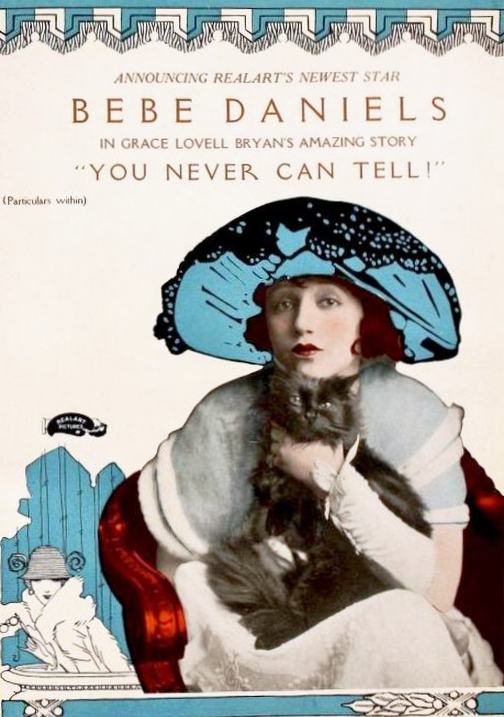
Director's Spotlight: United States
A Deep Dive into the 1920 Vision of Chester M. Franklin
Peeling back the layers of Chester M. Franklin's You Never Can Tell exposes the technical innovation that Chester M. Franklin introduced to the Romance format. Driven by an uncompromising commitment to Romance excellence, it stands as the definitive 1920 statement on Romance identity.
In You Never Can Tell, Chester M. Franklin pushes the boundaries of conventional narrative. The film's unique approach to its subject matter has sparked endless debates and interpretations among cinephiles and critics alike.
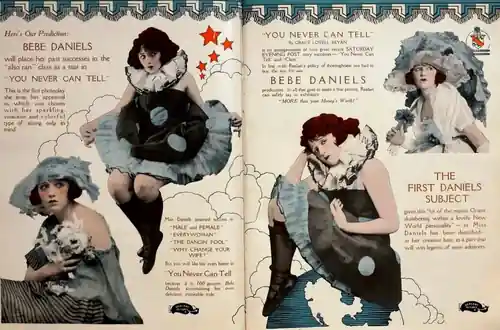
To fully appreciate You Never Can Tell, one must consider the cinematic climate of 1920. During this period, United States was undergoing significant artistic shifts, and Chester M. Franklin was at the forefront of this Romance movement, often challenging established norms.
| Cinematography | Handheld |
| Soundtrack | Synth-Heavy |
| Editing | Disjunctive |
| Art Direction | Baroque |
Visualizing the convergence of Chester M. Franklin's style and the core Romance narrative.
Rowena Jones attracts the attention of wealthy playboy William Vaughn, when trying on an expensive fur coat belonging to one of the guests at the hotel where she works as a hat check. Determined to marry a millionaire in order to alleviate her family's financial woes, Rowena accepts Vaughn's dinner invitation. That afternoon, while modeling at a fashion show, Rowena is attracted to a young man, but because he appears to be a poor chauffeur, she continues her pursuit of Vaughn. However, when Vaughn's wife appears at dinner, Rowena consents to go to a masked ball with her chauffeur. Arriving at the ball, she is pleasantly surprised to discover that her sweetheart is not a chauffeur but a millionaire, that meets her standard for a husband.
Decades after its release, You Never Can Tell remains a vital piece of the cinematic puzzle. Its influence can be seen in countless modern works, solidifying Chester M. Franklin's status as a master of the craft in United States and beyond.