
DbcultAccessing Vault...
Director's Spotlight
Senior Film Conservator
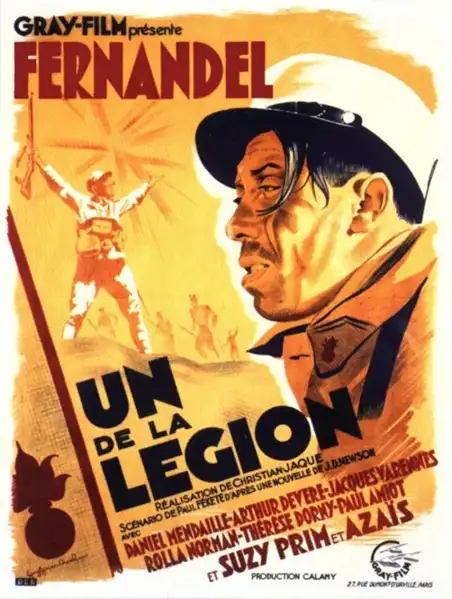
Director's Spotlight: France
A Deep Dive into the 1936 Vision of Christian-Jaque
The 1936 release of Caught in the Foreign Legion marked a significant moment for the stylistic boundaries pushed by Christian-Jaque during the production. In the context of France's rich cinematic history, it invites us to question our own perceptions of Adventure narratives.
In Caught in the Foreign Legion, Christian-Jaque pushes the boundaries of conventional narrative. The film's unique approach to its subject matter has sparked endless debates and interpretations among cinephiles and critics alike.
In this work, Christian-Jaque explores the intersection of Adventure and France cultural identity. The meticulous attention to detail suggests a deep-seated commitment to pushing the boundaries of the medium, ensuring that Caught in the Foreign Legion remains a relevant topic of study for Adventure enthusiasts.
| Cinematography | High-Contrast |
| Soundtrack | Minimalist |
| Editing | Disjunctive |
| Art Direction | Baroque |
Visualizing the convergence of Christian-Jaque's style and the core Adventure narrative.
Fernand Espitalion is miserable as totally whipped husband of a dragon 'passed on' -like cloths- by his late cousin. She often leaves him waiting outside like a dog when she does business. While she sees a notary about an inheritance, he's seduced to a bar by a shady man. The rogue gets Fernand drunk, knocks him out and switches costumes and papers. He's now Robert Durand, a voluntary Foreign legion recruit. After failed attempts to explain, he tastes military life and finds it less disciplined and more enjoyable then, marriage. But will that last when his wife tracks him and his unit is sent to action in tribal Algeria?
Decades after its release, Caught in the Foreign Legion remains a vital piece of the cinematic puzzle. Its influence can be seen in countless modern works, solidifying Christian-Jaque's status as a master of the craft in France and beyond.