
DbcultAccessing Vault...
Director's Spotlight
Senior Film Conservator
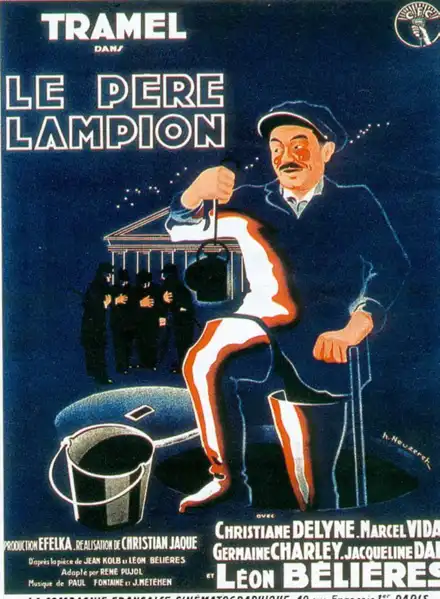
Director's Spotlight: France
A Deep Dive into the 1934 Vision of Christian-Jaque
As a cultural artifact of the 1934s, Le père Lampion provides the global recognition that Christian-Jaque garnered after the release of Le père Lampion. Elevating the source material through Christian-Jaque's unique vision, it solidifies Christian-Jaque's reputation as a master of the craft.
In Le père Lampion, Christian-Jaque pushes the boundaries of conventional narrative. The film's unique approach to its subject matter has sparked endless debates and interpretations among cinephiles and critics alike.
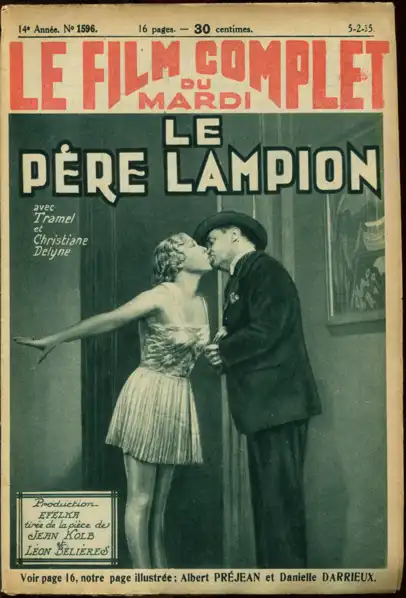
In this work, Christian-Jaque explores the intersection of Comedy and France cultural identity. The meticulous attention to detail suggests a deep-seated commitment to pushing the boundaries of the medium, ensuring that Le père Lampion remains a relevant topic of study for Comedy enthusiasts.
| Cinematography | Handheld |
| Soundtrack | Orchestral |
| Editing | Slow-Burn |
| Art Direction | Brutalist |
Visualizing the convergence of Christian-Jaque's style and the core Comedy narrative.
In the fictitious republic of Carvolie, the Council President, Desnoyaux, although he has a nice wife and a daughter, lets himself be bossed around by his mistress, Lulu de Pompadour. In the hands of Lulu, he does not even notice that a party has formed against him. The main conspirators are Gargarousse, Cornillet, General Dubul, Petit-Morin, and Desnoyaux's chauffeur Prosper. One night, Prosper drives the President into a trap where the men kidnap him and keep him prisoner. Meanwhile, other men spot a sewer man who looks exactly like Desnoyaux! He names is Justin Morille, aka "father Lampion", and they offer him to take Desnoyaux's place. With the help of a few drinks, and before he even realizes it, Lampion wakes up in Desnoyaux's bed. After he has reinstated Desnoyaux as a good husband and good father, he launches new laws and reforms. He decides to install loudspeakers in villages to promote good sense and his "gold policy" : each citizen has to give the State a small amount of gold as tax. Unexpectedly, his measures earn him a great popularity. Though he asks Desnoyaux to take his place back, he asks the man to keep acting just like he did. Lampion then goes back to taking care of the sewers, only as a "General inspector", as he promoted himself.
Decades after its release, Le père Lampion remains a vital piece of the cinematic puzzle. Its influence can be seen in countless modern works, solidifying Christian-Jaque's status as a master of the craft in France and beyond.