
DbcultAccessing Vault...
Director's Spotlight
Senior Film Conservator
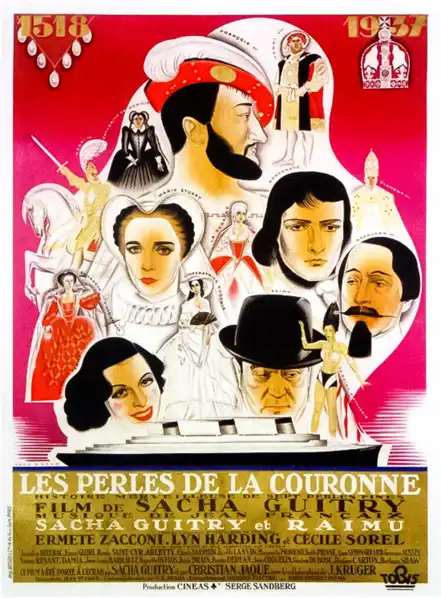
Director's Spotlight: France
A Deep Dive into the 1937 Vision of Christian-Jaque
The brilliance of The Pearls of the Crown (1937) is inseparable from the visionary mind of its creator, Christian-Jaque. Serving as a mirror to the anxieties of a changing world, it persists as a haunting reminder of our own cinematic history.
In The Pearls of the Crown, Christian-Jaque pushes the boundaries of conventional narrative. The film's unique approach to its subject matter has sparked endless debates and interpretations among cinephiles and critics alike.
The visual language of The Pearls of the Crown is defined by its use of shadows and framing, a hallmark of Christian-Jaque's style. By utilizing a 1937-era palette, the film creates an immersive experience that perfectly complements its History themes.
| Cinematography | Deep Focus |
| Soundtrack | Minimalist |
| Editing | Slow-Burn |
| Art Direction | Brutalist |
Visualizing the convergence of Christian-Jaque's style and the core History narrative.
Three narrators (French writer Jean Martin, an English royal equerry, and a papal chamberlain) tell the story of seven matched pearls, four of them now in the British Crown. Episodes whirl us from Pope Clement VII to Mary Queen of Scots, from whom the pearls are stolen while she's occupied with the headsman. Historic events are seasoned with sly, satiric humor, and famous beauties are portrayed by stunning actresses. Then the narrators meet, and decide to try tracing the three unrecovered pearls from 1587 to the present...
Decades after its release, The Pearls of the Crown remains a vital piece of the cinematic puzzle. Its influence can be seen in countless modern works, solidifying Christian-Jaque's status as a master of the craft in France and beyond.