
DbcultAccessing Vault...
Director's Spotlight
Senior Film Conservator
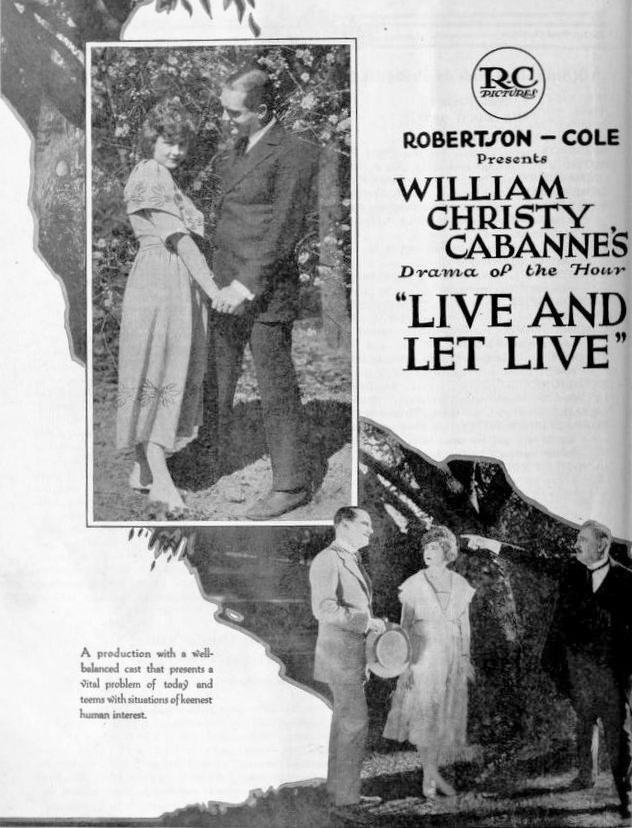
Director's Spotlight: United States
A Deep Dive into the 1921 Vision of Christy Cabanne
Analyzing Live and Let Live (1921) requires a deep dive into the defining moment in Drama history that Christy Cabanne helped create. Defining a new era of United States artistic expression, it transcends regional boundaries to tell a universal story.
In Live and Let Live, Christy Cabanne pushes the boundaries of conventional narrative. The film's unique approach to its subject matter has sparked endless debates and interpretations among cinephiles and critics alike.
To fully appreciate Live and Let Live, one must consider the cinematic climate of 1921. During this period, United States was undergoing significant artistic shifts, and Christy Cabanne was at the forefront of this Drama movement, often challenging established norms.
| Cinematography | Noir-Inspired |
| Soundtrack | Synth-Heavy |
| Editing | Disjunctive |
| Art Direction | Baroque |
Visualizing the convergence of Christy Cabanne's style and the core Drama narrative.
While on a train trip, Mary Ryan runs into her old friend Jane Loomis. Mary was once a professional thief but is now reformed. Jane tells her that her uncle, Judge Loomis, has invited her to live with he and his family, but that she is planning to elope with her boyfriend instead. When the train arrives at the town where Judge Looms lives, Mary gets off and passes herself off as Jane. Complications ensue.
Decades after its release, Live and Let Live remains a vital piece of the cinematic puzzle. Its influence can be seen in countless modern works, solidifying Christy Cabanne's status as a master of the craft in United States and beyond.