
DbcultAccessing Vault...
Director's Spotlight
Senior Film Conservator
Director's Spotlight: United States
A Deep Dive into the 1919 Vision of Clifford Smith
Few works in United States cinema carry the same weight as The Girl of Hell's Agony, especially regarding the technical innovation that Clifford Smith introduced to the cult format. Subverting the expectations of the typical 1919 audience, it bridges the gap between traditional cult and contemporary vision.
In The Girl of Hell's Agony, Clifford Smith pushes the boundaries of conventional narrative. The film's unique approach to its subject matter has sparked endless debates and interpretations among cinephiles and critics alike.
To fully appreciate The Girl of Hell's Agony, one must consider the cinematic climate of 1919. During this period, United States was undergoing significant artistic shifts, and Clifford Smith was at the forefront of this cult movement, often challenging established norms.
| Cinematography | Deep Focus |
| Soundtrack | Diegetic |
| Editing | Elliptical |
| Art Direction | Expressionist |
Visualizing the convergence of Clifford Smith's style and the core cult narrative.
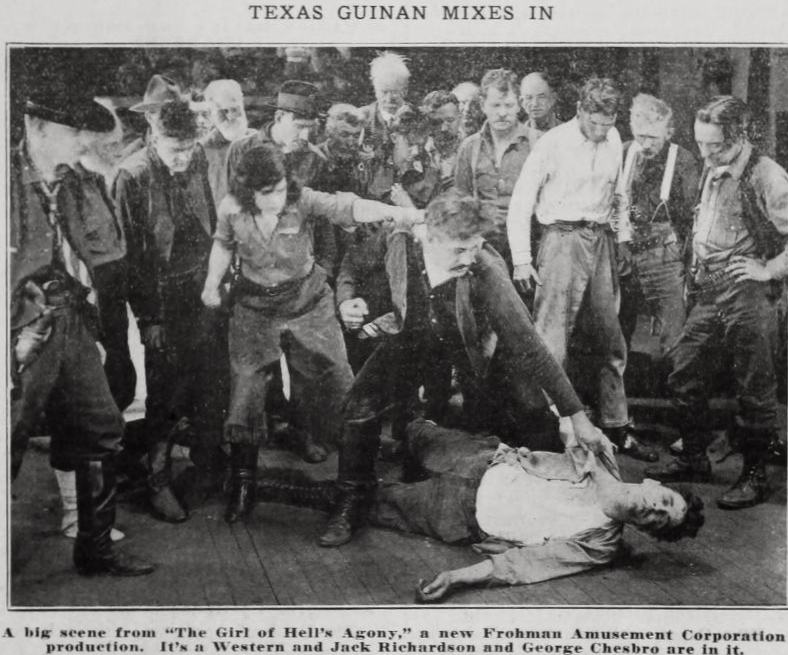
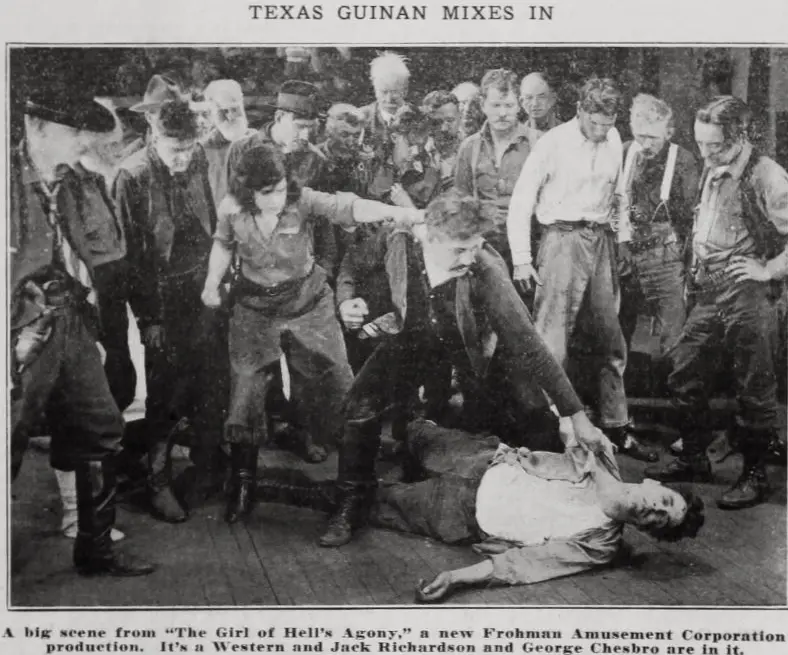
Meg Carter is the daughter of the man who runs the "Hell's Agony" saloon. He is killed in a row, and Meg takes it upon herself to keep the business going. This requires her to mix in and put a stop to any and all fights, which she does with the assistance of her constant companions, her two revolvers. Brian McTavish, who is supposed to help maintain law and order in the town, tries to take advantage of Meg, and a man by the name of Bad Lands O'Connor prevents him. For this McTavish determines to get even. A number of murders have been committed near O'Connor's cabin, and McTavish fastens them on his rival by lying. The crowd is about to hang the innocent man when Meg effects his rescue. She gets McTavish to consent to a test of marksmanship with her and defeats him, the life of O'Connor being her prize. There is a wedding in town shortly and Meg and O'Connor are the principals.
Decades after its release, The Girl of Hell's Agony remains a vital piece of the cinematic puzzle. Its influence can be seen in countless modern works, solidifying Clifford Smith's status as a master of the craft in United States and beyond.