
DbcultAccessing Vault...
Director's Spotlight
Senior Film Conservator
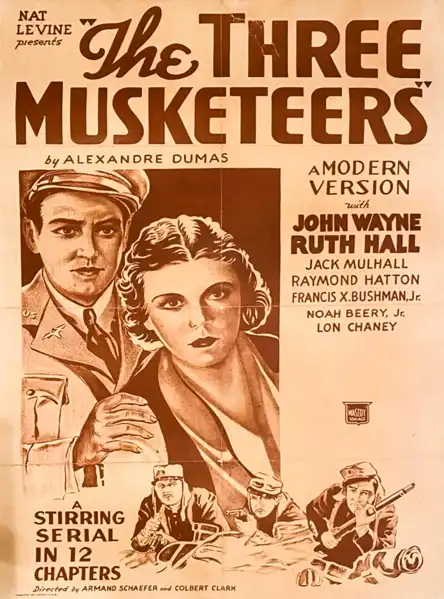
Director's Spotlight: United States
A Deep Dive into the 1933 Vision of Colbert Clark
As we revisit the 1933 masterpiece The Three Musketeers, we are struck by the meticulous attention to detail that Colbert Clark applied to every frame. Anchored by a narrative that is both personal and universal, it bridges the gap between traditional Thriller and contemporary vision.
In The Three Musketeers, Colbert Clark pushes the boundaries of conventional narrative. The film's unique approach to its subject matter has sparked endless debates and interpretations among cinephiles and critics alike.

The visual language of The Three Musketeers is defined by its use of shadows and framing, a hallmark of Colbert Clark's style. By utilizing a 1933-era palette, the film creates an immersive experience that perfectly complements its Thriller themes.
| Cinematography | High-Contrast |
| Soundtrack | Orchestral |
| Editing | Invisible |
| Art Direction | Kitsch |
Visualizing the convergence of Colbert Clark's style and the core Thriller narrative.
Tom Wayne rescues Clancy, Renard and Schmidt in the Arabian desert and they join him in going after El Shaitan, a bad guy who is never seen as he tries to wipe out the Foreign Legion.
Decades after its release, The Three Musketeers remains a vital piece of the cinematic puzzle. Its influence can be seen in countless modern works, solidifying Colbert Clark's status as a master of the craft in United States and beyond.