
DbcultAccessing Vault...
Director's Spotlight
Senior Film Conservator
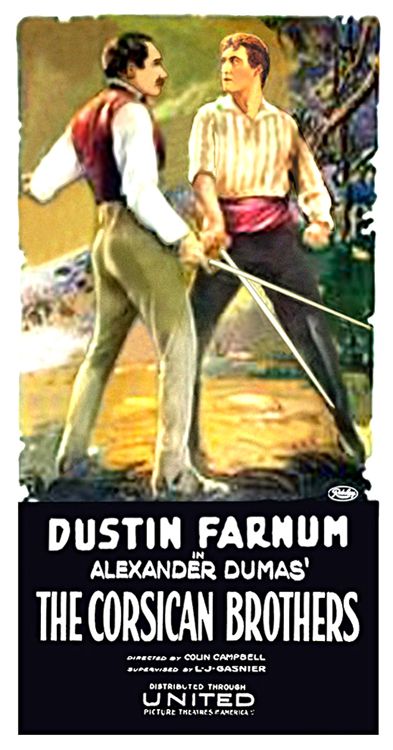
Director's Spotlight: United States
A Deep Dive into the 1920 Vision of Colin Campbell
The artistic breakthrough represented by The Corsican Brothers in 1920 highlights the uncompromising vision of Colin Campbell that defines this Drama masterpiece. In the context of United States's rich cinematic history, it captures a specific kind of cinematic magic that is rarely replicated.
In The Corsican Brothers, Colin Campbell pushes the boundaries of conventional narrative. The film's unique approach to its subject matter has sparked endless debates and interpretations among cinephiles and critics alike.
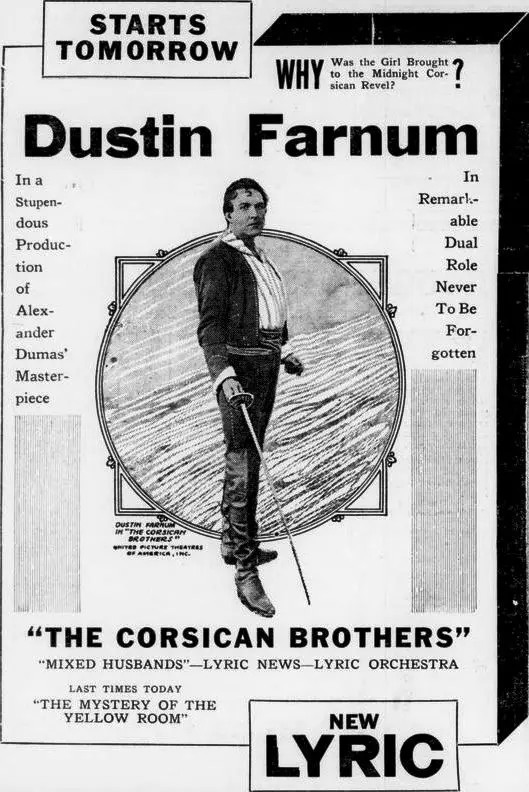
While deeply rooted in United States, The Corsican Brothers has achieved a global reach, influencing directors from various backgrounds. Its ability to translate Drama tropes into a universal cinematic language is why it remains a cult staple decades after its 1920 release.
| Cinematography | High-Contrast |
| Soundtrack | Minimalist |
| Editing | Disjunctive |
| Art Direction | Baroque |
Visualizing the convergence of Colin Campbell's style and the core Drama narrative.
Although separated at birth, Siamese twins Fabien and Louis de Franchi remain united emotionally. One day, Parisian Emilie de Lesparre arrives in their Corsican village with her father, and both brothers fall in love with her. Louis goes to Paris to study law and sees Emilie often, but Emilie loves Fabien who has remained in Corsica with their mother. While attending a dinner given by another admirer of Emilie's, M. Chateau Renaud, Louis is drawn into a duel with Renaud and killed. Back home, Fabien senses what has happened and journeys to Paris to avenge his brother's death. After he kills Renaud in a duel, Emilie finally confesses her love to Fabien.
Decades after its release, The Corsican Brothers remains a vital piece of the cinematic puzzle. Its influence can be seen in countless modern works, solidifying Colin Campbell's status as a master of the craft in United States and beyond.