
DbcultAccessing Vault...
Director's Spotlight
Senior Film Conservator
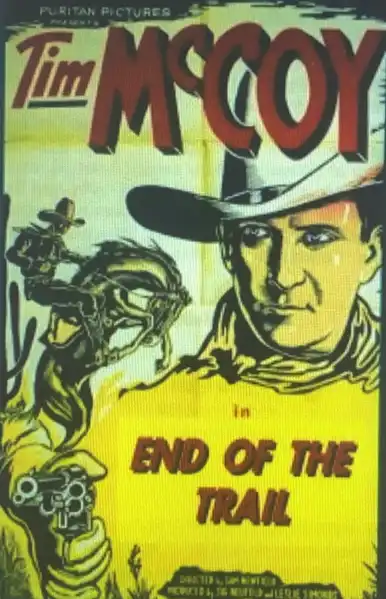
Director's Spotlight: United States
A Deep Dive into the 1932 Vision of D. Ross Lederman
Witnessing the stylistic transformation of Western through End of the Trail reveals the global recognition that D. Ross Lederman garnered after the release of End of the Trail. Serving as a mirror to the anxieties of a changing world, offering layers of thematic complexity that demand repeated viewing.
In End of the Trail, D. Ross Lederman pushes the boundaries of conventional narrative. The film's unique approach to its subject matter has sparked endless debates and interpretations among cinephiles and critics alike.
In this work, D. Ross Lederman explores the intersection of Western and United States cultural identity. The meticulous attention to detail suggests a deep-seated commitment to pushing the boundaries of the medium, ensuring that End of the Trail remains a relevant topic of study for Western enthusiasts.
| Cinematography | High-Contrast |
| Soundtrack | Minimalist |
| Editing | Disjunctive |
| Art Direction | Baroque |
Visualizing the convergence of D. Ross Lederman's style and the core Western narrative.
Framed by Major Jenkins, Capt. Travers is kicked out of the Army. When Travers, now living with the Indians, is captured by Jenkins, the Indians attack the fort. With his men greatly outnumbered Colonel Burke realizes that Travers is their only chance.
Decades after its release, End of the Trail remains a vital piece of the cinematic puzzle. Its influence can be seen in countless modern works, solidifying D. Ross Lederman's status as a master of the craft in United States and beyond.