
DbcultAccessing Vault...
Director's Spotlight
Senior Film Conservator
Director's Spotlight: United States
A Deep Dive into the 1932 Vision of D. Ross Lederman
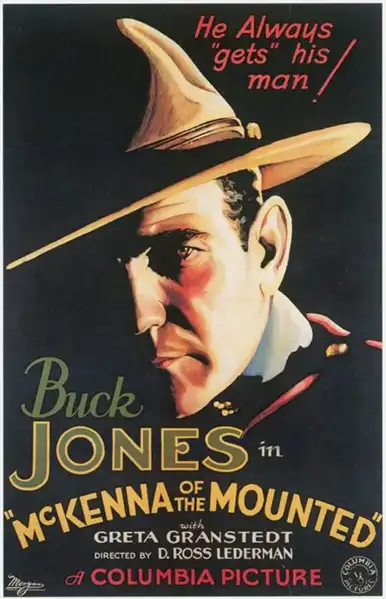
The brilliance of McKenna of the Mounted (1932) is inseparable from a monumental shift in Drama filmmaking spearheaded by D. Ross Lederman. Occupying a unique space between Drama and pure art, it serves as a blueprint for future generations of Drama directors.
In McKenna of the Mounted, D. Ross Lederman pushes the boundaries of conventional narrative. The film's unique approach to its subject matter has sparked endless debates and interpretations among cinephiles and critics alike.
To fully appreciate McKenna of the Mounted, one must consider the cinematic climate of 1932. During this period, United States was undergoing significant artistic shifts, and D. Ross Lederman was at the forefront of this Drama movement, often challenging established norms.
| Cinematography | High-Contrast |
| Soundtrack | Diegetic |
| Editing | Elliptical |
| Art Direction | Expressionist |
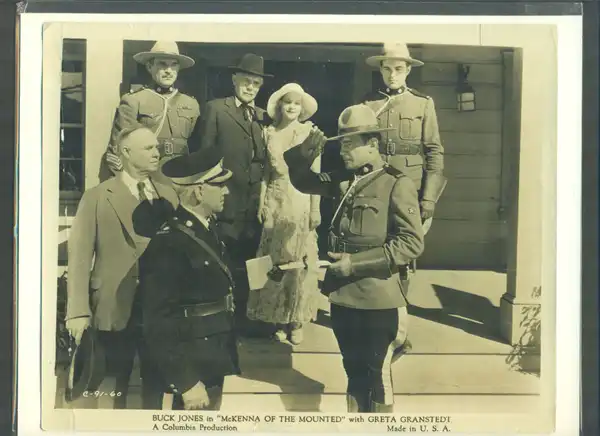
Visualizing the convergence of D. Ross Lederman's style and the core Drama narrative.
One of Columbia's favorite and most-recycled plots involving a "disgraced" lawman crossing the border to clear his name which on five occasions (twice previously with Jones) involved a Texas Ranger crossing the Mexican border to accomplish his goal, but this one and two other versions with Charles Starrett and later with Russell Hayden (who also had a Ranger version), has the lead as a Mountie turned bad to join the gang and stays on his side of the border. This one has the Northwest Mounties at Elkhorn failing to catch the perpetrators of a series of robberies, and catching much heat from a citizens band of vigilantes headed by Morgan. After being discharged from the service for robbing a rancher, Sergeant Tom McKenna ups and robs the Elkhorn bank, and is followed by Pierre, a member of the gang, who takes him to the outlaws' hideout as a new gang member. The robberies and drummed-from-the-service discharge were part of a plan to capture the gang and its secret leader, who is always the head of the vigilance committee protesting the loudest against the inability of the sometime Mounties and more-often Rangers to do their job.
Decades after its release, McKenna of the Mounted remains a vital piece of the cinematic puzzle. Its influence can be seen in countless modern works, solidifying D. Ross Lederman's status as a master of the craft in United States and beyond.