
DbcultAccessing Vault...
Director's Spotlight
Senior Film Conservator
Director's Spotlight: United States
A Deep Dive into the 1930 Vision of Dave Fleischer
Exploring the Family underpinnings of Wise Flies leads us to the uncompromising vision of Dave Fleischer that defines this Family masterpiece. Melding the raw energy of United States with a global Family appeal, it echoes the profound changes occurring in United States during that era.
In Wise Flies, Dave Fleischer pushes the boundaries of conventional narrative. The film's unique approach to its subject matter has sparked endless debates and interpretations among cinephiles and critics alike.
To fully appreciate Wise Flies, one must consider the cinematic climate of 1930. During this period, United States was undergoing significant artistic shifts, and Dave Fleischer was at the forefront of this Family movement, often challenging established norms.
| Cinematography | Noir-Inspired |
| Soundtrack | Orchestral |
| Editing | Invisible |
| Art Direction | Kitsch |
Visualizing the convergence of Dave Fleischer's style and the core Family narrative.
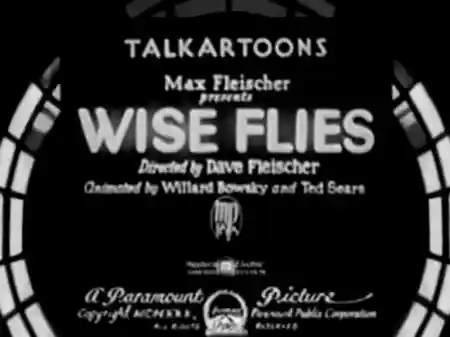
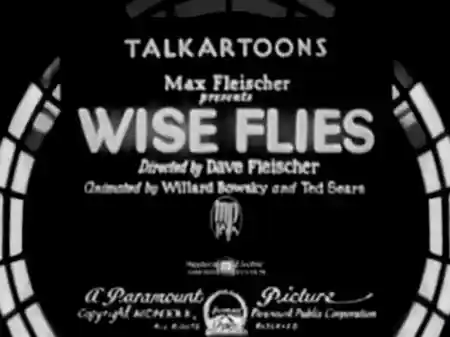
A hillbilly sleeps; atop his bald head, flies have constructed a playground. Other flies ski-jump off his nose. A couple is having a picnic when a spider drops in; the boy runs away as the girl fends off the spider. The spider slinks home and reports the news to his wife: "No flies." A fly goes by in an airplane; he picks up a girl fly that is passing by, but when he gets fresh, she slaps him. He throws her out of the plane, and she lands in the spider's web. The spider, elated, starts playing a tune on the web like a guitar. The fly joins in, but when she shows the spider her shoulder, the spider's wife sternly orders him: "No flies."
Decades after its release, Wise Flies remains a vital piece of the cinematic puzzle. Its influence can be seen in countless modern works, solidifying Dave Fleischer's status as a master of the craft in United States and beyond.