
DbcultAccessing Vault...
Director's Spotlight
Senior Film Conservator
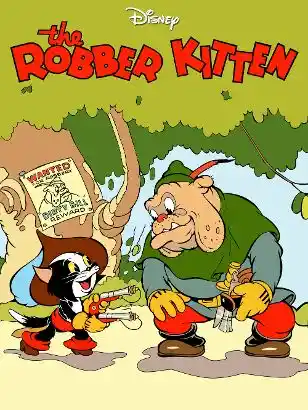
Director's Spotlight: United States
A Deep Dive into the 1935 Vision of David Hand
The enduring fascination with The Robber Kitten is a testament to the artistic risks taken by David Hand that eventually paid off. Challenging the viewer to find meaning in the Animation shadows, it reminds us of the fragility and beauty of the 1935s.
In The Robber Kitten, David Hand pushes the boundaries of conventional narrative. The film's unique approach to its subject matter has sparked endless debates and interpretations among cinephiles and critics alike.
To fully appreciate The Robber Kitten, one must consider the cinematic climate of 1935. During this period, United States was undergoing significant artistic shifts, and David Hand was at the forefront of this Animation movement, often challenging established norms.
| Cinematography | Handheld |
| Soundtrack | Experimental |
| Editing | Invisible |
| Art Direction | Kitsch |
Visualizing the convergence of David Hand's style and the core Animation narrative.
Ambrose the kitten renames himself Butch and runs away from home with plans to become a robber. His first intended victim, though, is a real robber: Dirty Bill, a dog. Dirty Bill asks Ambrose/Butch if he's pulled off any big jobs, and he tells of the stagecoach robbery we saw him enacting with dolls and toys at the beginning of the movie, without, of course, mentioning that it was all playacting. Bill asks him about the loot, and Butch brings out a bag of cookies. Bill won't accept that answer, and comes after Ambrose, scaring him right into the bath he earlier avoided.
Decades after its release, The Robber Kitten remains a vital piece of the cinematic puzzle. Its influence can be seen in countless modern works, solidifying David Hand's status as a master of the craft in United States and beyond.