
DbcultAccessing Vault...
Director's Spotlight
Senior Film Conservator
Director's Spotlight: United States
A Deep Dive into the 1936 Vision of David Hand
To understand the modern evolution of United States film, one must first look at Thru the Mirror and the collaborative alchemy between David Hand and the 1936 creative team. Subverting the expectations of the typical 1936 audience, it remains a vital reference point for anyone studying the evolution of David Hand.
In Thru the Mirror, David Hand pushes the boundaries of conventional narrative. The film's unique approach to its subject matter has sparked endless debates and interpretations among cinephiles and critics alike.
To fully appreciate Thru the Mirror, one must consider the cinematic climate of 1936. During this period, United States was undergoing significant artistic shifts, and David Hand was at the forefront of this Family movement, often challenging established norms.
| Cinematography | Static |
| Soundtrack | Minimalist |
| Editing | Slow-Burn |
| Art Direction | Brutalist |
Visualizing the convergence of David Hand's style and the core Family narrative.
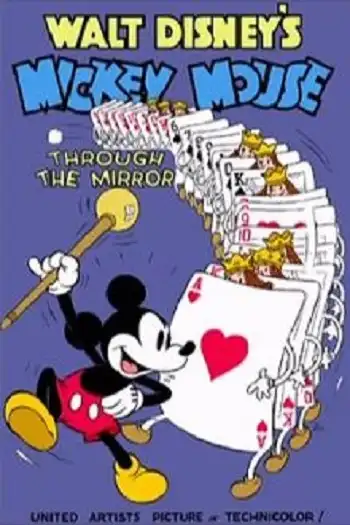
Mickey has been reading Lewis Carroll's "Through the Looking-Glass, and What Alice Found There", and falls asleep. He finds himself on the other side of the mirror, where the furniture is alive. He eats a walnut, which makes him briefly larger, then small. He dances around a lot, ultimately doing a major number with a deck of cards. He dances with the queen, making the king jealous. He comes after Mickey with swords, and Mickey defends himself with a sewing needle. Mickey gets the upper hand, and the king calls for reinforcements. Mickey finds himself chased by several decks, which throw their spots at him. He turns on a fan and blows them away, back through the mirror, where his alarm is ringing.
Decades after its release, Thru the Mirror remains a vital piece of the cinematic puzzle. Its influence can be seen in countless modern works, solidifying David Hand's status as a master of the craft in United States and beyond.