
DbcultAccessing Vault...
Director's Spotlight
Senior Film Conservator
Director's Spotlight: United States
A Deep Dive into the 1919 Vision of David Hartford
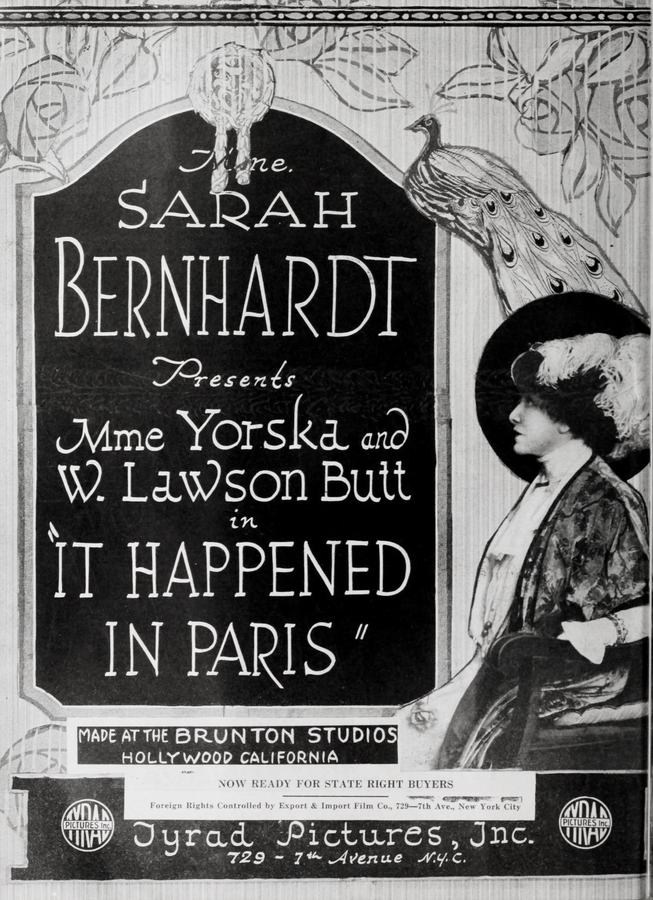
Exploring the cult underpinnings of It Happened in Paris leads us to the stylistic boundaries pushed by David Hartford during the production. Through a lens of existential fatalism and cult tropes, it continues to spark endless debates among critics and cinephiles alike.
In It Happened in Paris, David Hartford pushes the boundaries of conventional narrative. The film's unique approach to its subject matter has sparked endless debates and interpretations among cinephiles and critics alike.
| Cinematography | Static |
| Soundtrack | Synth-Heavy |
| Editing | Rhythmic |
| Art Direction | Naturalist |
Visualizing the convergence of David Hartford's style and the core cult narrative.
Yvonne Dupré, the sole survivor of a once-noble French family, makes a modest living selling her paintings to Leon Naisson, who resells them for exorbitant prices as the work of a famous artist. Leon confides to Yvonne's gypsy model, Romildo, that he is sexually attracted to the artist. Romildo drugs his lover, the fiery apache dancer, Juliette, who closely resembles Yvonne, then invites Leon to rape her for one thousand francs. Leon discovers that she is not Yvonne, but convinces the artist's sweetheart, Dick Gray, that she has been unfaithful. As police close in on Leon, he frames Yvonne by planting forged paintings in her studio. Following Yvonne's arrest, Juliette is informed by her foster sister that she was stolen by gypsies as a child and is actually Yvonne's twin sister. Juliette exposes Leon's operation to the police, reuniting Yvonne and Dick.
Decades after its release, It Happened in Paris remains a vital piece of the cinematic puzzle. Its influence can be seen in countless modern works, solidifying David Hartford's status as a master of the craft in United States and beyond.