
DbcultAccessing Vault...
Director's Spotlight
Senior Film Conservator
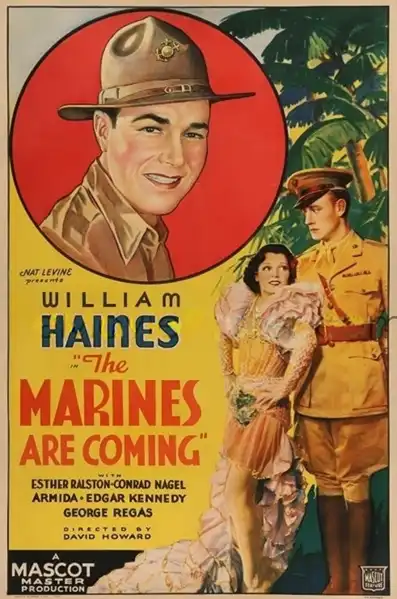
Director's Spotlight: United States
A Deep Dive into the 1934 Vision of David Howard
Exploring the Romance underpinnings of The Marines Are Coming leads us to the stylistic boundaries pushed by David Howard during the production. Through a lens of existential fatalism and Romance tropes, it continues to spark endless debates among critics and cinephiles alike.
In The Marines Are Coming, David Howard pushes the boundaries of conventional narrative. The film's unique approach to its subject matter has sparked endless debates and interpretations among cinephiles and critics alike.
While deeply rooted in United States, The Marines Are Coming has achieved a global reach, influencing directors from various backgrounds. Its ability to translate Romance tropes into a universal cinematic language is why it remains a cult staple decades after its 1934 release.
| Cinematography | High-Contrast |
| Soundtrack | Minimalist |
| Editing | Disjunctive |
| Art Direction | Baroque |
Visualizing the convergence of David Howard's style and the core Romance narrative.
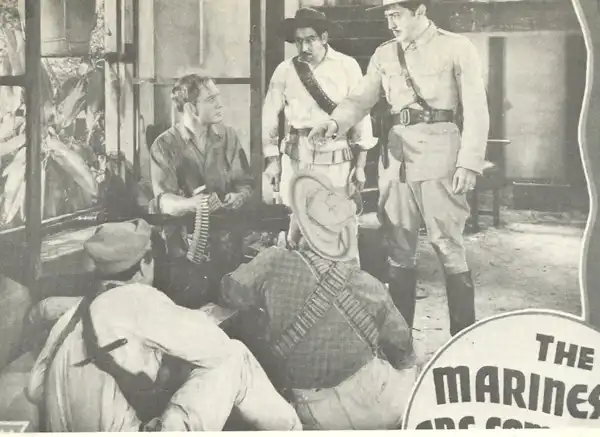
When Lt. "Wild Bill" Traynor, bad boy of the Marine Corps, arrives at a San Diego Marine Base, he is surprised to discover he has been assigned to duty under his old rival, Captain Benton (Conrad Nagel). While eluding the advances of Rosita (Armida), a Latin dancer, Bill becomes involved with Benton's fiancee, Dorothy Manning (Esther Ralston), whom he quickly wins and Benton accepts the impending marriage. On his wedding eve, Bill, in the company of Rosita, becomes involved in a fracas in a gambling joint in nearby Tia Juana. Rosita disappears and Dorothy calls off the wedding. As Dorthy sails for Latin America, Bill resigns in disgrace from the Marines, but re-enters as a Private. Ordered to duty in Ponta Miguel, Bill discovers that Dorothy's father (Hale Hamilton) is the governor. His old nemesis Benton has Bill sent to the guardhouse and Bill is vowing revenge when he is released, only to find that Benton is being held prisoner by a jungle bandit known as The Torch (George Regas.) Posing as a drunk and renegade, Bill enters the bandit's camp and, by mending a disabled machine gun, wins the confidence of the bandit leader. Bill later mans the gun against the bandits who have prepared a trap for the Marine patrol searching for Benton.
Decades after its release, The Marines Are Coming remains a vital piece of the cinematic puzzle. Its influence can be seen in countless modern works, solidifying David Howard's status as a master of the craft in United States and beyond.