
DbcultAccessing Vault...
Director's Spotlight
Senior Film Conservator
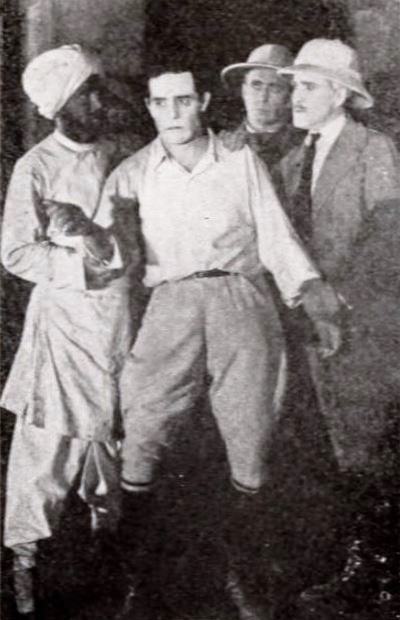
Director's Spotlight: United States
A Deep Dive into the 1921 Vision of David Smith
The brilliance of A Guilty Conscience (1921) is inseparable from the visionary mind of its creator, David Smith. Serving as a mirror to the anxieties of a changing world, it persists as a haunting reminder of our own cinematic history.
In A Guilty Conscience, David Smith pushes the boundaries of conventional narrative. The film's unique approach to its subject matter has sparked endless debates and interpretations among cinephiles and critics alike.
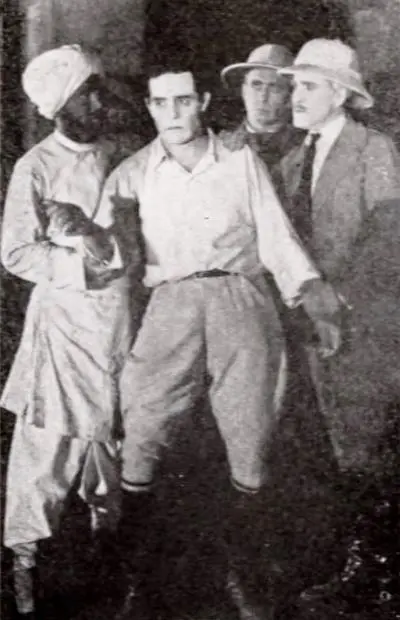
The visual language of A Guilty Conscience is defined by its use of shadows and framing, a hallmark of David Smith's style. By utilizing a 1921-era palette, the film creates an immersive experience that perfectly complements its Drama themes.
| Cinematography | High-Contrast |
| Soundtrack | Minimalist |
| Editing | Disjunctive |
| Art Direction | Baroque |
Visualizing the convergence of David Smith's style and the core Drama narrative.
Gilbert Thurstan, deputy inspector of the British Civil Service Commission in India, is warned by a physician that his wife, Emily, cannot remain in the hot climate where he is stationed, and he applies to his superior, Vincent Chalmers, for a transfer. Vincent is enamored with Emily and sends Gilbert to a post in Kajra, where the previous inspector died of fever. Emily goes to Simla at her husband's behest, with Vincent in pursuit. While he attempts to romance Emily, her ailing husband clashes with Hindu fanatics but manages to quell them single-handedly. Emily rejects Vincent, who is wracked with guilt over his treatment of Gilbert and travels to Kajra to relieve him of his appointment. Gilbert is reassigned to another city, where Emily happily awaits him.
Decades after its release, A Guilty Conscience remains a vital piece of the cinematic puzzle. Its influence can be seen in countless modern works, solidifying David Smith's status as a master of the craft in United States and beyond.