
DbcultAccessing Vault...
Director's Spotlight
Senior Film Conservator
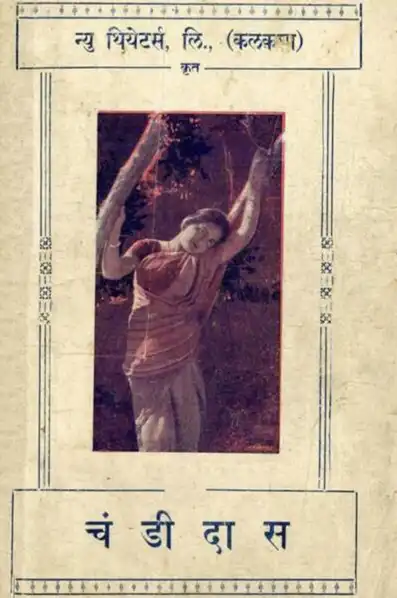
Director's Spotlight: India
A Deep Dive into the 1932 Vision of Debaki Kumar Bose
In the grand tapestry of Drama cinema, Chandidas serves as a bridge between the bold experimentation that has become synonymous with Debaki Kumar Bose. Breaking the traditional rules of Drama engagement, it highlights the importance of independent voices in India.
In Chandidas, Debaki Kumar Bose pushes the boundaries of conventional narrative. The film's unique approach to its subject matter has sparked endless debates and interpretations among cinephiles and critics alike.
The visual language of Chandidas is defined by its use of shadows and framing, a hallmark of Debaki Kumar Bose's style. By utilizing a 1932-era palette, the film creates an immersive experience that perfectly complements its Drama themes.
| Cinematography | High-Contrast |
| Soundtrack | Synth-Heavy |
| Editing | Disjunctive |
| Art Direction | Baroque |
Visualizing the convergence of Debaki Kumar Bose's style and the core Drama narrative.
This film is about Chandidas, a legendary 15th-C. Bengali Vaishnavite poet whose biography remains obscure but was an influence on the better documented Chaitanya (1486-1533), a school teacher who promoted the Vaishnavite ideology in Bengal, mostly through hymns about the Radha-Krishna legend. The film stressed the poet's teachings through the love story between Chandidas and a low-caste washerwoman, Rami. The conventional villain of the saint film genre, who represents the established order threatened by the outsider's revolutionary influence on common people, is the rapacious upper-caste merchant Bijoynarayan. When Rami rejects his advances, he persuades the high priest to insist that Chandidas must repent or be punished for associating with a low-caste woman. Chandidas agrees to repent but when he sees the injuries Rami has suffered at the hands of the merchant's goons, he rejects institutionalized religion in favor of the higher Vaishnavite call for a more democratic god and leaves the village with Rami.
Decades after its release, Chandidas remains a vital piece of the cinematic puzzle. Its influence can be seen in countless modern works, solidifying Debaki Kumar Bose's status as a master of the craft in India and beyond.