
DbcultAccessing Vault...
Director's Spotlight
Senior Film Conservator
Director's Spotlight: United States
A Deep Dive into the 1919 Vision of Dell Henderson
Witnessing the stylistic transformation of cult through Love in a Hurry reveals the global recognition that Dell Henderson garnered after the release of Love in a Hurry. Serving as a mirror to the anxieties of a changing world, offering layers of thematic complexity that demand repeated viewing.
In Love in a Hurry, Dell Henderson pushes the boundaries of conventional narrative. The film's unique approach to its subject matter has sparked endless debates and interpretations among cinephiles and critics alike.
To fully appreciate Love in a Hurry, one must consider the cinematic climate of 1919. During this period, United States was undergoing significant artistic shifts, and Dell Henderson was at the forefront of this cult movement, often challenging established norms.
| Cinematography | Handheld |
| Soundtrack | Diegetic |
| Editing | Rhythmic |
| Art Direction | Naturalist |
Visualizing the convergence of Dell Henderson's style and the core cult narrative.
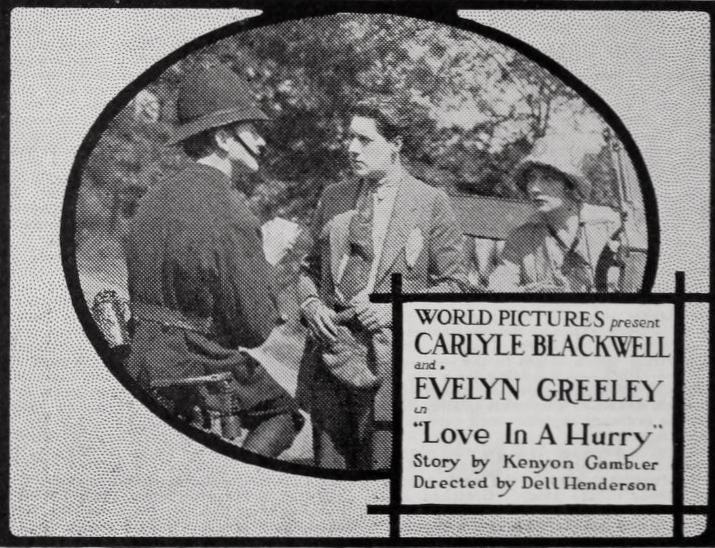
Traveling under the name "Charles Conant," the son of an American mine owner tries to enter England in 1916 after masquerading as a muleteer, but the captain of his ship, suspicious when he sees him looking through a spyglass, plans to take him back to the United States. Charles escapes and visits his relative, Lady Dartridge, and falls in love with her daughter, Lady Joan Templar, who is loved by her cousin, chief constable George Templar who, suspicious of Charles' manner and unexplainable meetings and activities, wants to arrest him as a spy. After Charles handcuffs two German agents, he reveals that he is a secret-service man. Earlier, he mistakenly sold titanium from his father's mine to a German agent. His successful mission recovered the titanium before it went to Germany aboard a U-boat. Promising to wed Lady Joan, Charles leaves to join the Lafayette Squadron in France.
Decades after its release, Love in a Hurry remains a vital piece of the cinematic puzzle. Its influence can be seen in countless modern works, solidifying Dell Henderson's status as a master of the craft in United States and beyond.