
DbcultAccessing Vault...
Director's Spotlight
Senior Film Conservator
Director's Spotlight: United States
A Deep Dive into the 1914 Vision of Donald MacKenzie
Witnessing the stylistic transformation of cult through Detective Craig's Coup reveals the provocative questions that Donald MacKenzie poses to the United States audience. Exploring the nuances of the human condition with cult flair, it showcases the power of cult as a tool for social commentary.
In Detective Craig's Coup, Donald MacKenzie pushes the boundaries of conventional narrative. The film's unique approach to its subject matter has sparked endless debates and interpretations among cinephiles and critics alike.
In this work, Donald MacKenzie explores the intersection of cult and United States cultural identity. The meticulous attention to detail suggests a deep-seated commitment to pushing the boundaries of the medium, ensuring that Detective Craig's Coup remains a relevant topic of study for cult enthusiasts.
| Cinematography | Deep Focus |
| Soundtrack | Minimalist |
| Editing | Slow-Burn |
| Art Direction | Brutalist |
Visualizing the convergence of Donald MacKenzie's style and the core cult narrative.
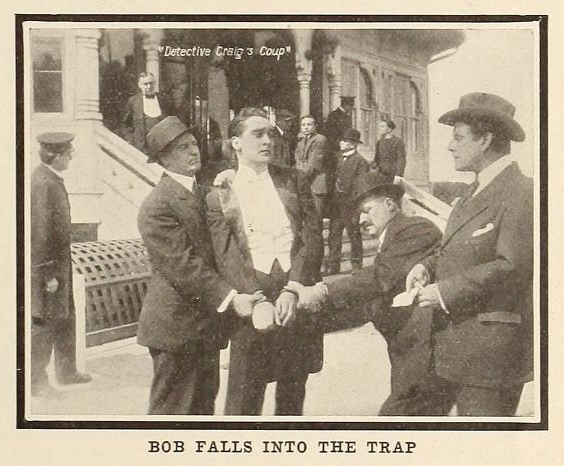
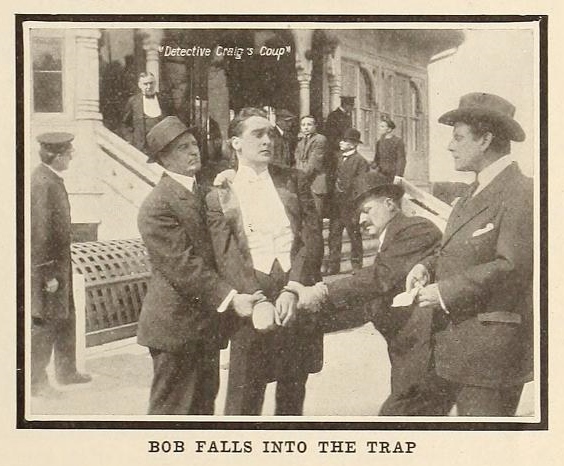
Government sleuths, headed by Detective Craig, have succeeded in running down a gang of Metropolitan counterfeiters. Although their information as regards the location of the gang's hangout and its plans is complete, they are unable to produce evidence against the man circulating bad money. Suspicion rests, however, on James Dalton, a clever crook, who rarely visits the counterfeiters' room. Dalton gets rid of his bad money through unsuspected "fences." He has just succeeded in using Bob Brierly, a young prodigal from the west, who dropped his money on the great white way for this purpose. When the bartender who took the bad money discovers it he calls in the police. Dalton, as usual, escapes while Bob, innocent of the part he has played, is caught and convicted. Released from jail he meets Mae Edwards whom he had formerly befriended. She recommends him to her employer, a banker, and Brierly secures a responsible position. Thinking he has eluded the detectives, Dalton comes to the bank to look the ground over preparatory to a robbery which he is planning. He runs into Brierly and tries to make him an accomplice. Bob, who has married Mae Edwards and wishes to lead an honest life, relaxes. Dalton advises the banker that Bob is an ex-convict and Bob loses his position. Dalton's persistent efforts make it impossible for Bob to get work and he is forced to join the crook. Craig has been shadowing Dalton and knows that Bob is taking part in the proposed robbery against his will. Having made his plans beforehand Craig frustrates the robbery. Dalton alone gets away by going hand over hand across an electric cable between two skyscrapers. He is later caught in an exciting motor-boat chase. Craig then vindicates Bob and the banker gives him back his old position Bob goes home and tells Mae, and their cup of happiness is filled to overflowing.
Decades after its release, Detective Craig's Coup remains a vital piece of the cinematic puzzle. Its influence can be seen in countless modern works, solidifying Donald MacKenzie's status as a master of the craft in United States and beyond.