
DbcultAccessing Vault...
Director's Spotlight
Senior Film Conservator
Director's Spotlight: United States
A Deep Dive into the 1918 Vision of Douglas Gerrard
Witnessing the stylistic transformation of cult through Madame Spy reveals the provocative questions that Douglas Gerrard poses to the United States audience. Exploring the nuances of the human condition with cult flair, it showcases the power of cult as a tool for social commentary.
In Madame Spy, Douglas Gerrard pushes the boundaries of conventional narrative. The film's unique approach to its subject matter has sparked endless debates and interpretations among cinephiles and critics alike.
To fully appreciate Madame Spy, one must consider the cinematic climate of 1918. During this period, United States was undergoing significant artistic shifts, and Douglas Gerrard was at the forefront of this cult movement, often challenging established norms.
| Cinematography | High-Contrast |
| Soundtrack | Orchestral |
| Editing | Slow-Burn |
| Art Direction | Brutalist |
Visualizing the convergence of Douglas Gerrard's style and the core cult narrative.
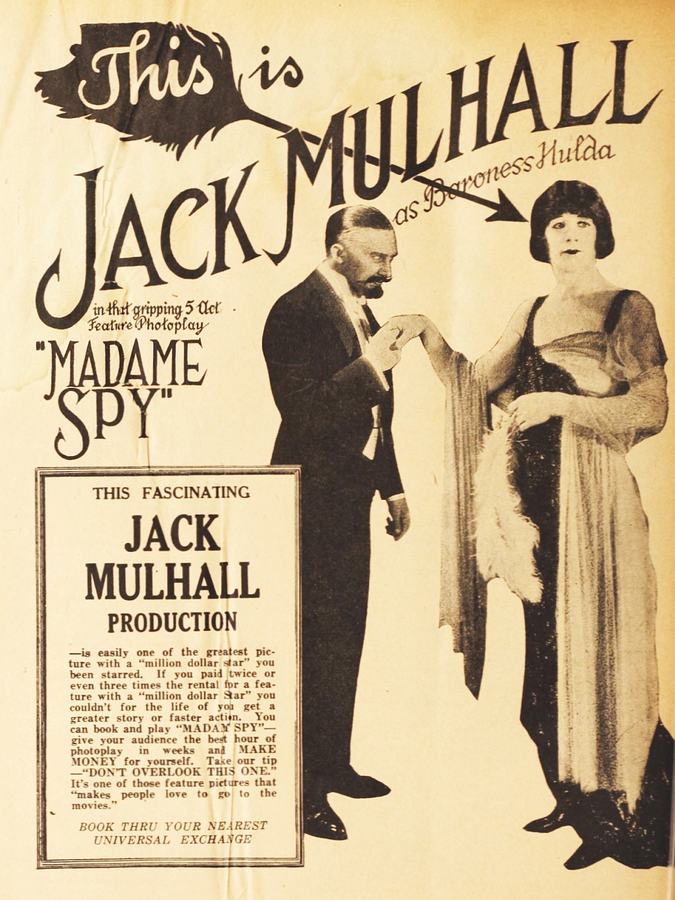
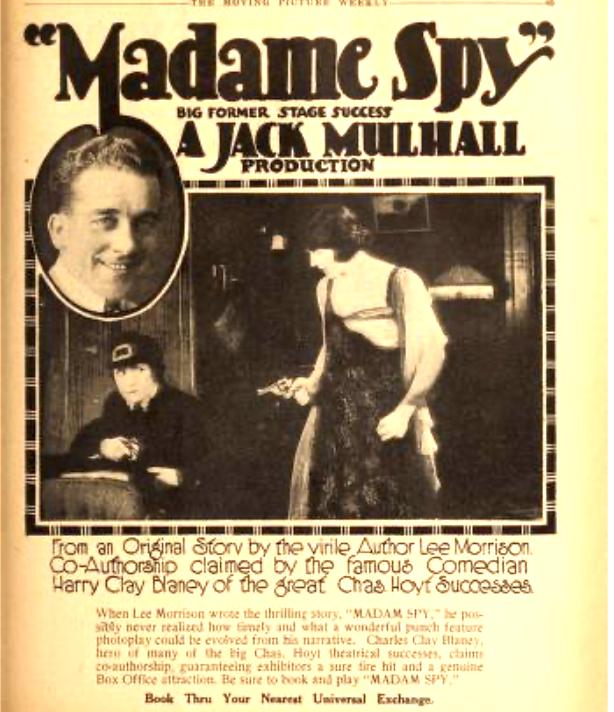
Robert "Bob" Wesley horrifies his father, Admiral John Wesley of the Naval Advisory Board, by failing his examination at the Annapolis naval academy. Bob seizes the chance to redeem himself, however, when he overhears Hanson, the butler, plotting with German agent Count Von Ornstorff to deliver his father's plans for the Atlantic coastal defenses to German Baroness Von Hulda. In Baltimore, Bob meets the baroness' ship and, with the aid of an old college professor, makes her his prisoner. Having impersonated a woman in the college play, Bob disguises himself as the baroness, rendezvous with the spies, and obtains the plans. Baroness Von Hulda escapes, but Bob recaptures her and then turns all of the spies over to the authorities. Admiral Wesley expresses his pride in his son, and Bob wins Phyllis Covington, the girl of his heart.
Decades after its release, Madame Spy remains a vital piece of the cinematic puzzle. Its influence can be seen in countless modern works, solidifying Douglas Gerrard's status as a master of the craft in United States and beyond.