
DbcultAccessing Vault...
Director's Spotlight
Senior Film Conservator
Director's Spotlight: United States
A Deep Dive into the 1924 Vision of Duke Worne
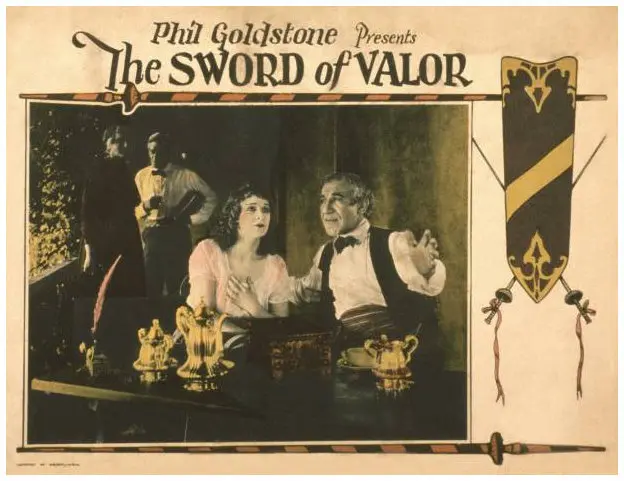
To understand the modern evolution of United States film, one must first look at The Sword of Valor and the meticulous attention to detail that Duke Worne applied to every frame. Reflecting the political and social shifts of the 1924s, it showcases the power of Drama as a tool for social commentary.
In The Sword of Valor, Duke Worne pushes the boundaries of conventional narrative. The film's unique approach to its subject matter has sparked endless debates and interpretations among cinephiles and critics alike.
To fully appreciate The Sword of Valor, one must consider the cinematic climate of 1924. During this period, United States was undergoing significant artistic shifts, and Duke Worne was at the forefront of this Drama movement, often challenging established norms.
| Cinematography | Static |
| Soundtrack | Orchestral |
| Editing | Invisible |
| Art Direction | Kitsch |
Visualizing the convergence of Duke Worne's style and the core Drama narrative.
Spanish Don Guzman de Ruis y Montejo, living quietly in his Madrid hacienda, determines upon a rich marriage for his daughter, Ynez, rather than letting her be courted by Rodrigo, a Gypsy chieftain. Papa takes his daughter to the Riviera, where Ismid Matrouli, a wealthy Levantine of mongrel origin, asks Ynez's father for her hand. However, at a garden party, Ynez meets an American military attache named Captain Grant Lee Brooke, and the two are love-struck at first sight, especially after he rescues her during a swim in the Mediterranean. Matrouli sics a professional swordsman on the captain, but the American socks him in the jaw. The inevitable duel between Brooke and Matrouili follows, but Roderigo takes a pot shot at the captain and hits the Levantine instead. Roderigo then kidnaps Ynez and carries her away to a mountain stronghold, but the captain follows and rescues her. Her father gives the couple his consent to marry.
Decades after its release, The Sword of Valor remains a vital piece of the cinematic puzzle. Its influence can be seen in countless modern works, solidifying Duke Worne's status as a master of the craft in United States and beyond.