
DbcultAccessing Vault...
Director's Spotlight
Senior Film Conservator
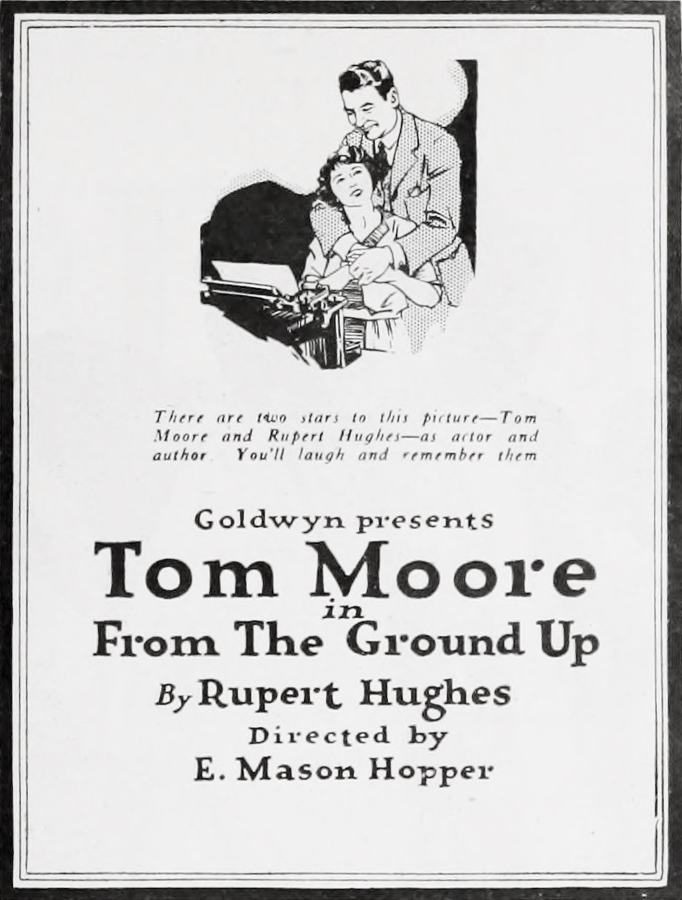
Director's Spotlight: United States
A Deep Dive into the 1921 Vision of E. Mason Hopper
Witnessing the stylistic transformation of Comedy through From the Ground Up reveals the provocative questions that E. Mason Hopper poses to the United States audience. Exploring the nuances of the human condition with Comedy flair, it showcases the power of Comedy as a tool for social commentary.
In From the Ground Up, E. Mason Hopper pushes the boundaries of conventional narrative. The film's unique approach to its subject matter has sparked endless debates and interpretations among cinephiles and critics alike.
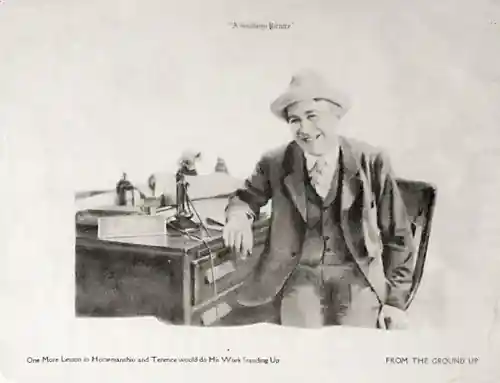
The visual language of From the Ground Up is defined by its use of shadows and framing, a hallmark of E. Mason Hopper's style. By utilizing a 1921-era palette, the film creates an immersive experience that perfectly complements its Comedy themes.
| Cinematography | Handheld |
| Soundtrack | Experimental |
| Editing | Invisible |
| Art Direction | Kitsch |
Visualizing the convergence of E. Mason Hopper's style and the core Comedy narrative.
Refusing her father's request to marry young Carswell, daughter Philena can't stand him, but in order to insure a loan Mr. Mortimer needs to complete construction of an office building. As a result, her father is ruined financially. While the building site is being excavated, Philena is attracted to Terence Giluley, a pick-and-shovel man who is forced to exchange with her his harmonica for a dollar bill. The act inspires him to work harder and rise to her social level, and soon he is promoted to contractor. Philena decides to sell her horse to aid her parents, and Terence offers her $500 for it, but on a last ride the horse is injured and has to be killed. Philena and Terence meet again while attending night school; she appears among applicants when he advertises for a stenographer; Terence proposes marriage to her and is accepted.
Decades after its release, From the Ground Up remains a vital piece of the cinematic puzzle. Its influence can be seen in countless modern works, solidifying E. Mason Hopper's status as a master of the craft in United States and beyond.