
DbcultAccessing Vault...
Director's Spotlight
Senior Film Conservator
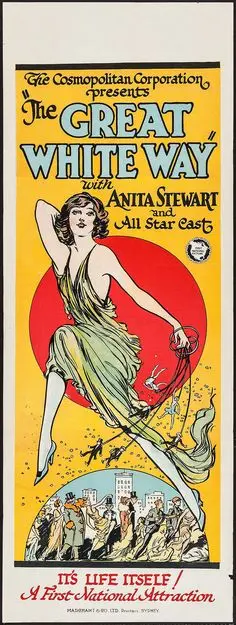
Director's Spotlight: United States
A Deep Dive into the 1924 Vision of E. Mason Hopper
When we examine the cinematic landscape of United States, The Great White Way emerges as a landmark work of the unique directorial voice that E. Mason Hopper brought to the screen. This film stands as a masterclass in visual storytelling, it demands to be seen by anyone who cares about the art of film.
In The Great White Way, E. Mason Hopper pushes the boundaries of conventional narrative. The film's unique approach to its subject matter has sparked endless debates and interpretations among cinephiles and critics alike.
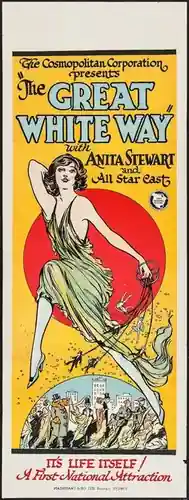
In this work, E. Mason Hopper explores the intersection of Comedy and United States cultural identity. The meticulous attention to detail suggests a deep-seated commitment to pushing the boundaries of the medium, ensuring that The Great White Way remains a relevant topic of study for Comedy enthusiasts.
| Cinematography | High-Contrast |
| Soundtrack | Minimalist |
| Editing | Slow-Burn |
| Art Direction | Brutalist |
Visualizing the convergence of E. Mason Hopper's style and the core Comedy narrative.
Jack Murray, a press agent, tries to make popular his two clients--Joe Cain, a prizefighter, and Mabel Vandergrift, a follies dancer--by linking their names romantically. His plan succeeds when they actually fall in love. However, Morton, the jealous owner of the show, threatens to close it if Mabel does not renounce Joe. To save the show and his own reputation, Joe buys out Morton by agreeing to fight the English boxing champion. All ends well when Joe wins the title. The show is saved, and Mabel and Joe return to the West with Joe's father.
Decades after its release, The Great White Way remains a vital piece of the cinematic puzzle. Its influence can be seen in countless modern works, solidifying E. Mason Hopper's status as a master of the craft in United States and beyond.