
DbcultAccessing Vault...
Director's Spotlight
Senior Film Conservator
Director's Spotlight: United States
A Deep Dive into the 1915 Vision of Edgar Jones
Witnessing the stylistic transformation of cult through The Woman Pays reveals the provocative questions that Edgar Jones poses to the United States audience. Exploring the nuances of the human condition with cult flair, it showcases the power of cult as a tool for social commentary.
In The Woman Pays, Edgar Jones pushes the boundaries of conventional narrative. The film's unique approach to its subject matter has sparked endless debates and interpretations among cinephiles and critics alike.
To fully appreciate The Woman Pays, one must consider the cinematic climate of 1915. During this period, United States was undergoing significant artistic shifts, and Edgar Jones was at the forefront of this cult movement, often challenging established norms.
| Cinematography | High-Contrast |
| Soundtrack | Diegetic |
| Editing | Elliptical |
| Art Direction | Expressionist |
Visualizing the convergence of Edgar Jones's style and the core cult narrative.
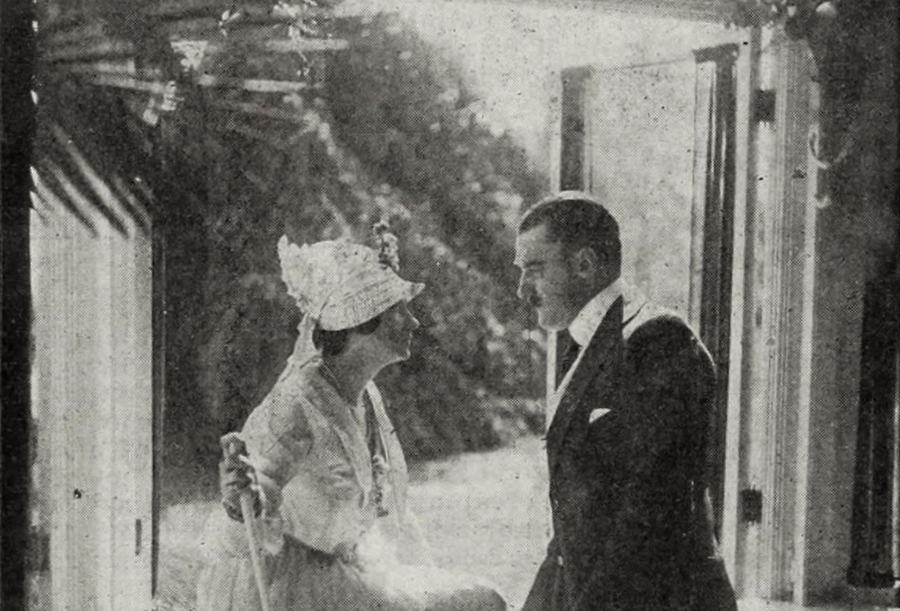
Beth Coventry, society favorite and ward of a wealthy aunt, is beloved by three men: rich broker Philip Murdock; Marquis de Tourville, a polished, brilliant social lion; and poor but promising young banker John Langton. Following an impulse, coupled with the advice of her aunt, Mrs. Gordon, Beth accepts Langton and they are married. Mrs. Connie Beverly, a young widow whose husband was Langton's best friend, mistakes Langton's kind interest in her for a deeper feeling and becomes infatuated with him, but in her determination to win his love she plans to ruin his home. John and Beth are living in a modest little home which they call "Love Cottage." Mrs. Beverly calls on Beth there and finds her reading letters which she had written to the Marquis before her marriage, which he graciously returned. Her eyes fall on the pages of one letter in which Beth had written among other things, "Europe is so far away I must have time to consider your proposal." This letter Mrs. Beverly steals. Murdock, too, is bent on breaking up the Langton home if possible, hoping yet to have Beth for his own. With Mrs. Beverly he makes an appeal to Beth's vanity, her one failing, and they succeed in getting her dissatisfied with her lot. Beth insists on John leaving the "Love Cottage" and moving into a pretentious home, where she proceeds to entertain lavishly and far beyond John's means. Murdock, posing as John's friend, induces him to speculate in stock. John is desperate as Beth tells him he will lose her love if he cannot supply her with an unreasonable allowance. He is finally driven to misappropriate bonds entrusted to his care by Beth's aunt. The couple become estranged. John strives to recover the money he has lost in speculation, while Beth gives herself up entirely to social life. At the height of a great ball, lightning strikes a tree, it crashes through a window and falls upon Beth. She is severely wounded and a cut on her face mars her beauty for life. John is called, but Beth mistakes his look of pity for one of disgust. The next day she leaves to go in seclusion while a specialist attends her. Mrs. Beverly tells John she has gone away with the Marquis, and to prove it shows him part of Beth's letter, written when she was considering De Tourville's proposal before her marriage. Beth's aunt dies several months later, leaving her fortune to her niece. Rather than face the disgrace which will attend the exposure of John's theft of the aunt's bonds, he determines to end his life at the "Love Cottage." Beth's lawyers notify her about the missing bonds. She protects John by saying she knows where they are, then she goes in search of him. Through a strange coincidence, they meet at the "Love Cottage," where they renew their first vows of love.
Decades after its release, The Woman Pays remains a vital piece of the cinematic puzzle. Its influence can be seen in countless modern works, solidifying Edgar Jones's status as a master of the craft in United States and beyond.