
DbcultAccessing Vault...
Director's Spotlight
Senior Film Conservator
Director's Spotlight: United States
A Deep Dive into the 1919 Vision of Edgar Lewis
Analyzing Calibre 38 (1919) requires a deep dive into the defining moment in cult history that Edgar Lewis helped create. Defining a new era of United States artistic expression, it transcends regional boundaries to tell a universal story.
In Calibre 38, Edgar Lewis pushes the boundaries of conventional narrative. The film's unique approach to its subject matter has sparked endless debates and interpretations among cinephiles and critics alike.
| Cinematography | Deep Focus |
| Soundtrack | Orchestral |
| Editing | Invisible |
| Art Direction | Kitsch |
Visualizing the convergence of Edgar Lewis's style and the core cult narrative.
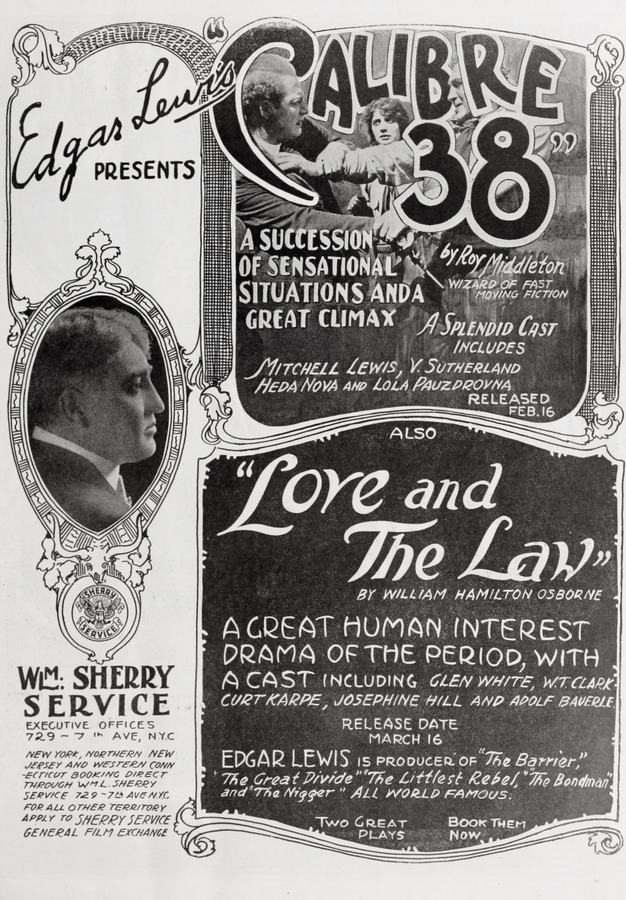
Montana cattleman Austin Brandt is jilted by Rosemary, who elopes with stranger Royce Greer, but he is consoled by his 20-year-old niece Joan. Rosemary later returns to Custer City to run a dance hall with her husband, who mistreats her. Eastern capitalist Robert Barton comes to town with his son Ford to settle a financial misunderstanding with Brandt. After reprimanding his son, Robert Barton is later found dead in his bed. Knowing of their financial argument, Ford believes Brandt is responsible, while Greer and his gang claim that Ford committed the murder. Convinced of his innocence, Ford asks Brandt to help him find the murderer. They discover that Barton was shot with a .38 caliber bullet, and Greer carries such a revolver. Meanwhile Greer's mob storms Brandt's house demanding Ford be taken prisoner. Brandt forces a confession from Greer, who is dragged away. After her husband's death, Rosemary departs and leaves a note explaining her love for Brandt. Joan and Ford find happiness together.
Decades after its release, Calibre 38 remains a vital piece of the cinematic puzzle. Its influence can be seen in countless modern works, solidifying Edgar Lewis's status as a master of the craft in United States and beyond.