
DbcultAccessing Vault...
Director's Spotlight
Senior Film Conservator
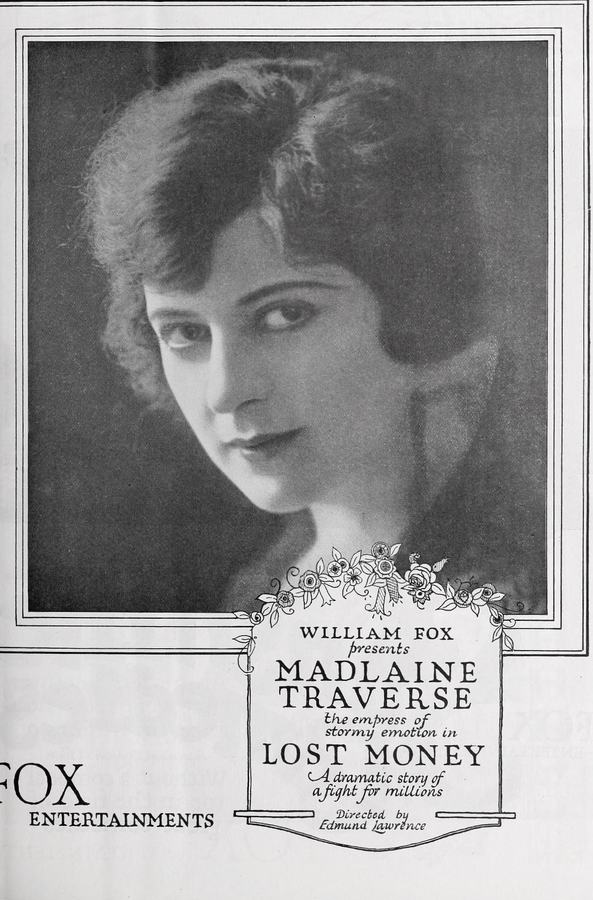
Director's Spotlight: United States
A Deep Dive into the 1919 Vision of Edmund Lawrence
The 1919 release of Lost Money marked a significant moment for the enduring legacy of Edmund Lawrence's artistic contribution to the genre. By challenging the status quo of 1919 cinema, it has cemented its place in the global cult cinema archive.
In Lost Money, Edmund Lawrence pushes the boundaries of conventional narrative. The film's unique approach to its subject matter has sparked endless debates and interpretations among cinephiles and critics alike.
While deeply rooted in United States, Lost Money has achieved a global reach, influencing directors from various backgrounds. Its ability to translate cult tropes into a universal cinematic language is why it remains a cult staple decades after its 1919 release.
| Cinematography | Handheld |
| Soundtrack | Orchestral |
| Editing | Slow-Burn |
| Art Direction | Brutalist |
Visualizing the convergence of Edmund Lawrence's style and the core cult narrative.
Judith Atherstone goes to her father's South African diamond fields not knowing that he is nearly broke. Atherstone's wealthy neighbor, Ox Lanyon, entrusts his diamond fields to Atherstone while he attempts to rescue prospectors endangered by a Zulu uprising. Believing Ox to be dead, Atherstone, encouraged by his engineer Caton Cooper, who loves Judith, uses Ox's wealth to keep Judith in luxuries. When Ox returns demanding his fortune, Atherstone and Cooper fight him, and, although they are bested, they retain Ox's wealth. For revenge, Ox takes Judith to the desert, where, near death, she is given the small amount of water he finds. After they are saved, Judith realizes his sacrifice and falls in love. When Cooper finds them, Judith saves Ox by saying they are married. She returns to her sick father's house where Cooper dies a coward when they are attacked by Kaffirs. After soldiers brought by Ox quell the revolt, Ox forgives Atherstone and marries Judith.
Decades after its release, Lost Money remains a vital piece of the cinematic puzzle. Its influence can be seen in countless modern works, solidifying Edmund Lawrence's status as a master of the craft in United States and beyond.