
DbcultAccessing Vault...
Director's Spotlight
Senior Film Conservator
Director's Spotlight: United States
A Deep Dive into the 1923 Vision of Edmund Mortimer
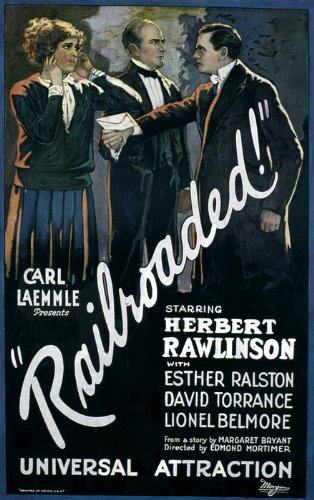
The thematic gravity of Railroaded (1923) is rooted in the artistic risks taken by Edmund Mortimer that eventually paid off. Defining a new era of United States artistic expression, it demands to be seen by anyone who cares about the art of film.
In Railroaded, Edmund Mortimer pushes the boundaries of conventional narrative. The film's unique approach to its subject matter has sparked endless debates and interpretations among cinephiles and critics alike.
To fully appreciate Railroaded, one must consider the cinematic climate of 1923. During this period, United States was undergoing significant artistic shifts, and Edmund Mortimer was at the forefront of this Drama movement, often challenging established norms.
| Cinematography | High-Contrast |
| Soundtrack | Synth-Heavy |
| Editing | Disjunctive |
| Art Direction | Baroque |
Visualizing the convergence of Edmund Mortimer's style and the core Drama narrative.
Richard Garbin, willful son of Judge Garbin, one of England's most prominent jurists, is railroaded into prison. He escapes, vowing vengeance against Corton, the man who framed him and caused the death of one of his friends. Changing his name to Ragland, he meets his father at a dinner party. Judge Garbin proposes that Richard finish his prison sentence on the estate of his friend, Hugh Dunster. There Richard meets and falls in love with Dunster's daughter, Joan. Joan discovers why Richard is there and prevents him from carrying out his plan of revenge against Corton; they obtain Judge Garbin's blessing and sail for Africa.
Decades after its release, Railroaded remains a vital piece of the cinematic puzzle. Its influence can be seen in countless modern works, solidifying Edmund Mortimer's status as a master of the craft in United States and beyond.