
DbcultAccessing Vault...
Director's Spotlight
Senior Film Conservator
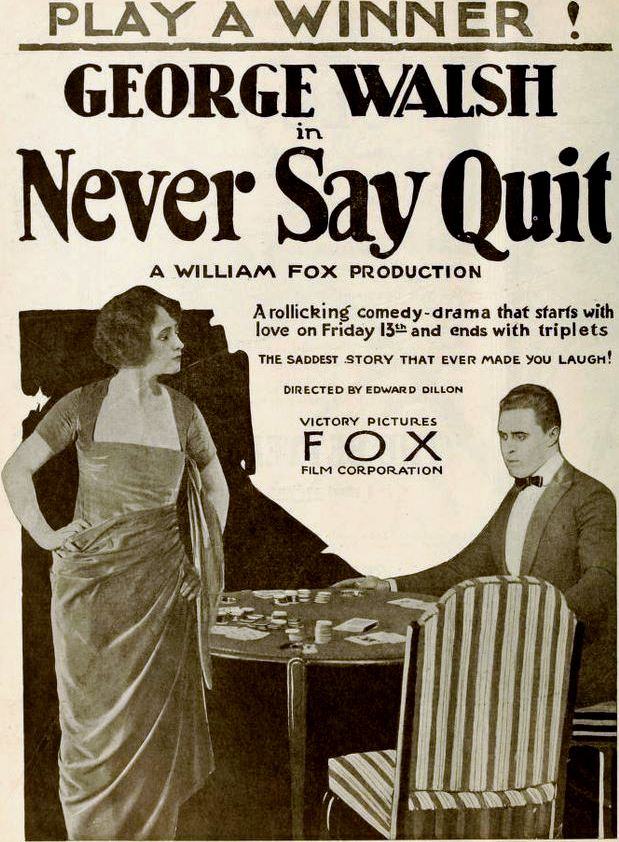
Director's Spotlight: United States
A Deep Dive into the 1919 Vision of Edward Dillon
The thematic gravity of Never Say Quit (1919) is rooted in the artistic risks taken by Edward Dillon that eventually paid off. Defining a new era of United States artistic expression, it demands to be seen by anyone who cares about the art of film.
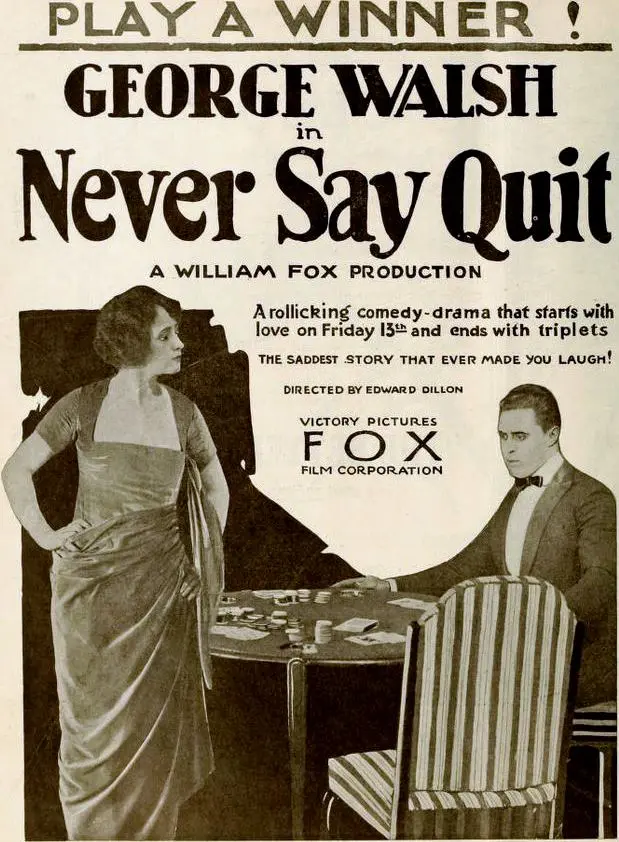
In Never Say Quit, Edward Dillon pushes the boundaries of conventional narrative. The film's unique approach to its subject matter has sparked endless debates and interpretations among cinephiles and critics alike.
| Cinematography | Handheld |
| Soundtrack | Minimalist |
| Editing | Disjunctive |
| Art Direction | Baroque |
Visualizing the convergence of Edward Dillon's style and the core cult narrative.
Born on Friday the thirteenth with thirteen letters in his name, Reginald Jones has been plagued with bad luck his entire life. Attempting to escape his jinx, Reginald attends a chauffeur's ball, where, after he helps a girl whose companion is berating her, the girl hits Reginald for interfering. After Reginald loses at matching coins, is sold out in the stock market, and is fleeced of his money in a badger game, he loses his inheritance of $999,998.60 when he gets arrested for fighting, and misses his aunt's funeral. Reginald then boards a schooner and meets millionaire Professor Lattimore and his daughter Helen, supposedly there to look for buried treasure. After falling in love with Helen, Reginald discovers the ship captain's plot to hold Lattimore for ransom. Reginald fights off all the crew members and forces the wireless operator to signal a U. S. Destroyer, which arrives and saves them. Reginald and Helen marry.
Decades after its release, Never Say Quit remains a vital piece of the cinematic puzzle. Its influence can be seen in countless modern works, solidifying Edward Dillon's status as a master of the craft in United States and beyond.