
DbcultAccessing Vault...
Director's Spotlight
Senior Film Conservator
Director's Spotlight: United States
A Deep Dive into the 1918 Vision of Edward Dillon
As we revisit the 1918 masterpiece Our Little Wife, we are struck by the atmospheric immersion that Edward Dillon achieves throughout Our Little Wife. Exploring the nuances of the human condition with cult flair, it solidifies Edward Dillon's reputation as a master of the craft.
In Our Little Wife, Edward Dillon pushes the boundaries of conventional narrative. The film's unique approach to its subject matter has sparked endless debates and interpretations among cinephiles and critics alike.
In this work, Edward Dillon explores the intersection of cult and United States cultural identity. The meticulous attention to detail suggests a deep-seated commitment to pushing the boundaries of the medium, ensuring that Our Little Wife remains a relevant topic of study for cult enthusiasts.
| Cinematography | Noir-Inspired |
| Soundtrack | Experimental |
| Editing | Invisible |
| Art Direction | Kitsch |
Visualizing the convergence of Edward Dillon's style and the core cult narrative.
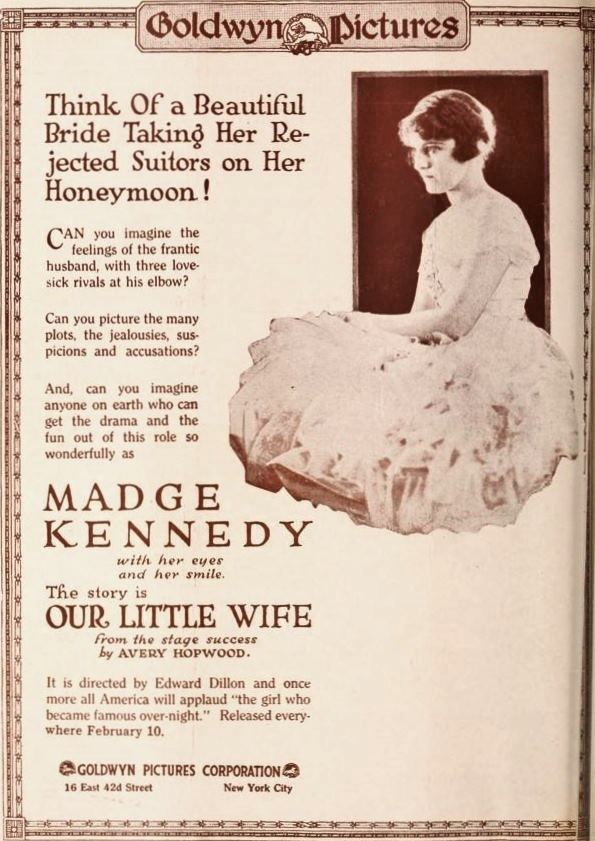
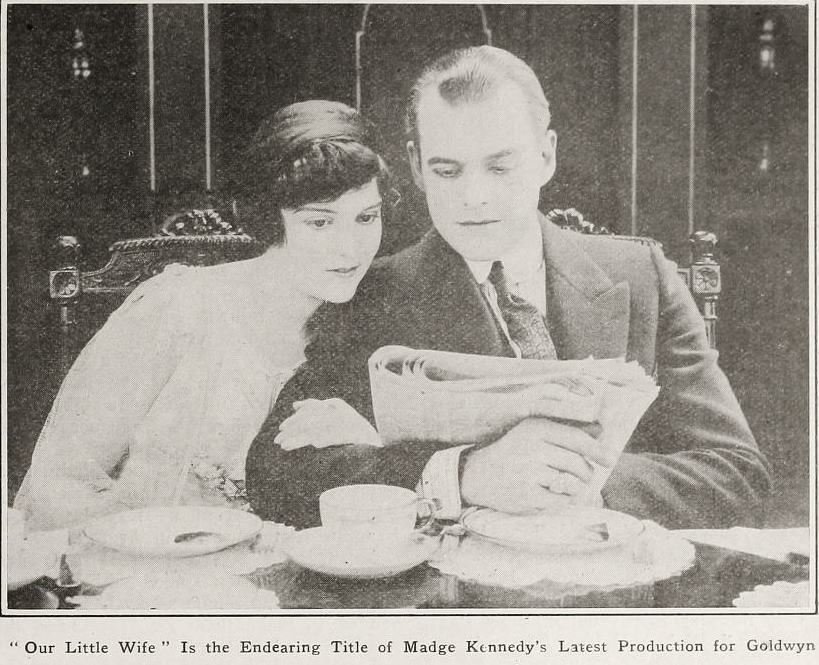
Dodo Warren, an ingenuous young bride, decides to take her three rejected suitors - Bobo Brown, Tommy Belden, and Dr. Elliott - along with her and her husband Herb on their honeymoon. Herb's protests fall on deaf ears, and soon all five are comfortably ensconced in a Florida resort. Herb finds Dodo in what appears to be a compromising position with Dr. Elliott, but her heartfelt explanation convinces him of her innocence. A year later, Dodo tries to rescue Angie Martin, who has quarreled with her fiancé Bobo and therefore plans to attend a party with George Haywood. After calling Dr. Elliott, Dodo asks Bobo to accompany her to the party, which Angie fails to attend, and later that evening, the well-meaning young wife is locked into Haywood's apartment. Following a new round of explanations, Dodo promises never to look at another man again.
Decades after its release, Our Little Wife remains a vital piece of the cinematic puzzle. Its influence can be seen in countless modern works, solidifying Edward Dillon's status as a master of the craft in United States and beyond.