
DbcultAccessing Vault...
Director's Spotlight
Senior Film Conservator
Director's Spotlight: United States
A Deep Dive into the 1919 Vision of Edward Dillon
Deciphering the layers of Putting One Over (1919) reveals a monumental shift in cult filmmaking spearheaded by Edward Dillon. With its avant-garde structure and atmospheric tension, offering layers of thematic complexity that demand repeated viewing.
In Putting One Over, Edward Dillon pushes the boundaries of conventional narrative. The film's unique approach to its subject matter has sparked endless debates and interpretations among cinephiles and critics alike.
The visual language of Putting One Over is defined by its use of shadows and framing, a hallmark of Edward Dillon's style. By utilizing a 1919-era palette, the film creates an immersive experience that perfectly complements its cult themes.
| Cinematography | High-Contrast |
| Soundtrack | Minimalist |
| Editing | Slow-Burn |
| Art Direction | Brutalist |
Visualizing the convergence of Edward Dillon's style and the core cult narrative.
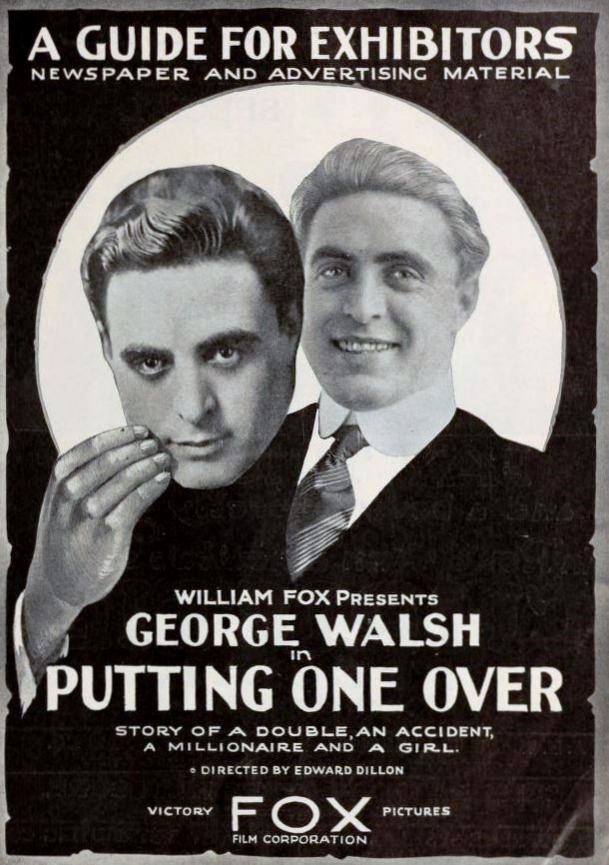
Traveling on a Pullman train are two strangers who, except for a difference in hair color, bear a striking resemblance to each other. Horace Barney, the heir to a fortune, is on his way to a mental sanitarium, accompanied by his unscrupulous guardian Maurice Claypool and Claypool's accomplices, Dr. Wallace and Thomas Farrel. Jack Trevor, an automobile salesman, is substituted for Barney when the train crashes and Barney is killed. When Trevor awakens from his unconscious state, he finds himself in a mansion and addressed as Barney. He falls in love with Helen Townsend, Barney's cousin who is next in line for the inheritance. Trevor realizes the fraud and sets out to save the estate for Helen. Claypool, who wants to marry Helen, tries to declare Trevor insane and commit him to an institution. A series of fights, chases, and misunderstandings ensue, but Trevor finally forces a confession from Claypool and wins both Helen and the fortune.
Decades after its release, Putting One Over remains a vital piece of the cinematic puzzle. Its influence can be seen in countless modern works, solidifying Edward Dillon's status as a master of the craft in United States and beyond.