
DbcultAccessing Vault...
Director's Spotlight
Senior Film Conservator

Director's Spotlight: United States
A Deep Dive into the 1921 Vision of Edward Dillon
The evocative power of Sheltered Daughters stems from the unique collaboration between the subversive storytelling techniques employed by Edward Dillon in 1921. Synthesizing the best elements of United States and international cinema, it reminds us of the fragility and beauty of the 1921s.
In Sheltered Daughters, Edward Dillon pushes the boundaries of conventional narrative. The film's unique approach to its subject matter has sparked endless debates and interpretations among cinephiles and critics alike.
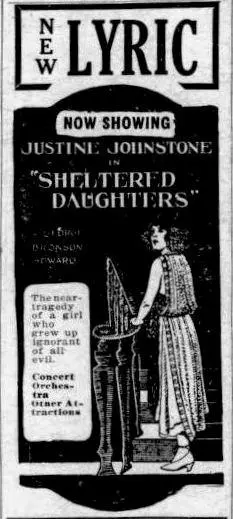
The visual language of Sheltered Daughters is defined by its use of shadows and framing, a hallmark of Edward Dillon's style. By utilizing a 1921-era palette, the film creates an immersive experience that perfectly complements its Drama themes.
| Cinematography | Deep Focus |
| Soundtrack | Minimalist |
| Editing | Disjunctive |
| Art Direction | Baroque |
Visualizing the convergence of Edward Dillon's style and the core Drama narrative.
New York police sergeant Jim Dark is determined that his daughter, Jenny, will be shielded from any knowledge of evil. Consequently, she lives in a dream world, imagining herself to be a descendant of Saint Jeanne d'Arc, but has a loyal friend in reporter Pep Mullins. Her school friend, Adele, also raised by overly protective parents, is ejected from her home when she becomes inebriated after spending an evening with a disreputable young man. Later, Jenny falls into the hands of a crooked Frenchman, posing as a wounded veteran, who absconds with $250,000 intended for war orphans. Jim tracks the criminal to a rendezvous with his daughter and rescues her with the aid of Pep, who makes Jenny his wife.
Decades after its release, Sheltered Daughters remains a vital piece of the cinematic puzzle. Its influence can be seen in countless modern works, solidifying Edward Dillon's status as a master of the craft in United States and beyond.