
DbcultAccessing Vault...
Director's Spotlight
Senior Film Conservator
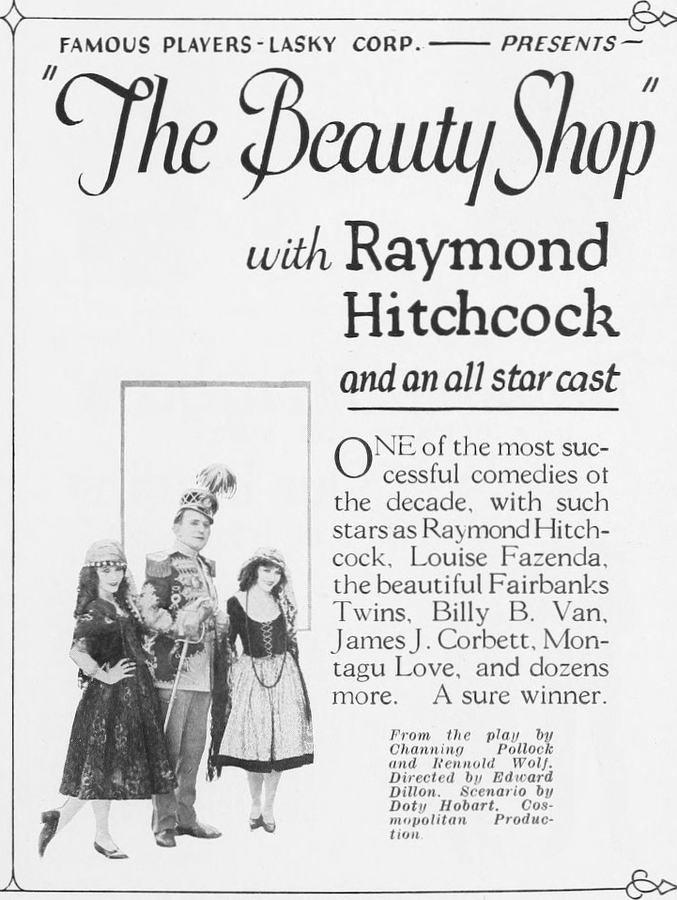
Director's Spotlight: United States
A Deep Dive into the 1922 Vision of Edward Dillon
The thematic gravity of The Beauty Shop (1922) is rooted in the artistic risks taken by Edward Dillon that eventually paid off. Defining a new era of United States artistic expression, it demands to be seen by anyone who cares about the art of film.
In The Beauty Shop, Edward Dillon pushes the boundaries of conventional narrative. The film's unique approach to its subject matter has sparked endless debates and interpretations among cinephiles and critics alike.
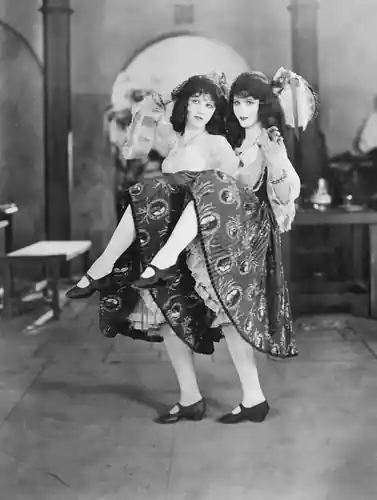
The visual language of The Beauty Shop is defined by its use of shadows and framing, a hallmark of Edward Dillon's style. By utilizing a 1922-era palette, the film creates an immersive experience that perfectly complements its Comedy themes.
| Cinematography | High-Contrast |
| Soundtrack | Experimental |
| Editing | Elliptical |
| Art Direction | Expressionist |
Visualizing the convergence of Edward Dillon's style and the core Comedy narrative.
Dr. Arbutus Budd is a New York physician specializing in "beauty". His business is successful but he is still plagued by money problems. One day he gets an idea--he obtains the coat-of-arms of a long-forgotten Italian noble family, the Bolognias, and uses it as his logo on his line of beauty products. As luck would have it, the crest is recognized in Italy, and before long an emissary is sent to the US to bring back "The Baron". Budd is overjoyed, as he believes that he is about to inherit the Bolognia family fortune. However, it turns out that all he inherits is something he wasn't counting on--a blood feud with a local bandit.
Decades after its release, The Beauty Shop remains a vital piece of the cinematic puzzle. Its influence can be seen in countless modern works, solidifying Edward Dillon's status as a master of the craft in United States and beyond.