
DbcultAccessing Vault...
Director's Spotlight
Senior Film Conservator

Director's Spotlight: United States
A Deep Dive into the 1924 Vision of Edward F. Cline
The thematic gravity of Galloping Bungalows (1924) is rooted in the historical context that Edward F. Cline weaves into the Short fabric. Synthesizing the best elements of United States and international cinema, it highlights the importance of independent voices in United States.
In Galloping Bungalows, Edward F. Cline pushes the boundaries of conventional narrative. The film's unique approach to its subject matter has sparked endless debates and interpretations among cinephiles and critics alike.
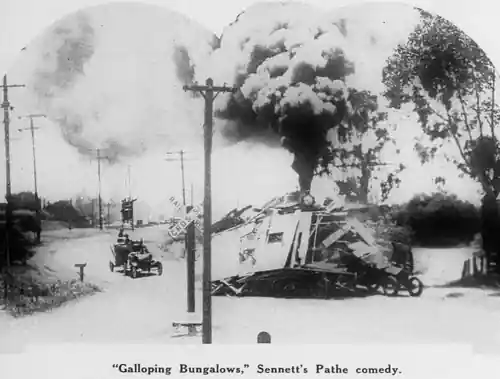
The visual language of Galloping Bungalows is defined by its use of shadows and framing, a hallmark of Edward F. Cline's style. By utilizing a 1924-era palette, the film creates an immersive experience that perfectly complements its Short themes.
| Cinematography | Noir-Inspired |
| Soundtrack | Diegetic |
| Editing | Elliptical |
| Art Direction | Expressionist |
Visualizing the convergence of Edward F. Cline's style and the core Short narrative.
All the qualified men line up to be chosen, as an heiress advertises that she will marry the man with the most interesting mustache, that marriage which comes with a mansion. John Syrup Soother wins the marriage to who he believes is the heiress, Olive Palmer, a tank of a woman who has lost her beauty with age. But he learns that his betrothed is not the heiress, Diana Palmer, but her mother. Howson Lotts, a shyster and one of Diana's other suitors, sells John a beach-front house for his new life, that house which is not all that it seems on the surface. In the meantime, others still will do anything to be Diana's betrothed, that choice in which John now has a different but still vested interest.
Decades after its release, Galloping Bungalows remains a vital piece of the cinematic puzzle. Its influence can be seen in countless modern works, solidifying Edward F. Cline's status as a master of the craft in United States and beyond.