
DbcultAccessing Vault...
Director's Spotlight
Senior Film Conservator
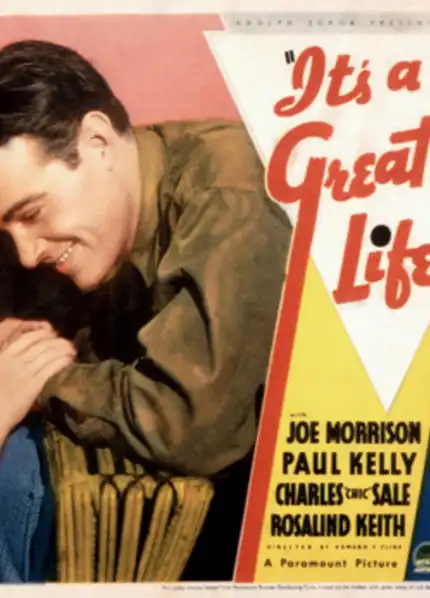
Director's Spotlight: United States
A Deep Dive into the 1935 Vision of Edward F. Cline
Analyzing It's a Great Life (1935) requires a deep dive into the unique directorial voice that Edward F. Cline brought to the screen. By challenging the status quo of 1935 cinema, it continues to spark endless debates among critics and cinephiles alike.
In It's a Great Life, Edward F. Cline pushes the boundaries of conventional narrative. The film's unique approach to its subject matter has sparked endless debates and interpretations among cinephiles and critics alike.
While deeply rooted in United States, It's a Great Life has achieved a global reach, influencing directors from various backgrounds. Its ability to translate Romance tropes into a universal cinematic language is why it remains a cult staple decades after its 1935 release.
| Cinematography | Deep Focus |
| Soundtrack | Experimental |
| Editing | Elliptical |
| Art Direction | Expressionist |
Visualizing the convergence of Edward F. Cline's style and the core Romance narrative.
Desperate for work, Johnny Barclay leaves Ma and Grandpop to join the newly formed Civilian Conversation Corps. On the way he meets cynical young hobo Roscoe "Rockie" Johnson, and, although Rockie believes that hopping freight trains is a great life, Johnny convinces him to join the Corps. At first the hardship of the Corps induces Rockie to quit, but he returns with a recruit, Lazy Bones. Since Rockie has no family, Johnny induces him to send twenty-five dollars of his thirty-dollar paycheck to Johnny's neighbor, Mary Jennings, who has been raising her little brothers and sisters since her parents died. On a two-week vacation, Johnny brings Rockie home to meet the family, and Rockie is surprised to find Mary to be a beautiful and independent woman. Mary and Rockie fall in love, but when Johnny proposes marriage to Mary, she does not give a definite yes or no. Back at camp, Rockie throws himself into his work, but Johnny becomes jealous when he sees that Rockie is receiving letters from Mary and he is not, and accuses Rockie of stealing his girl. Mary comes for visitors' day, and Rockie avoids her to give Johnny time with her. Mary is mystified by Rockie's disappearance during the camp's informal stage show, during which she plays accompaniment to Johnny's song. When a forest fire erupts in the forest and entraps the trucks carrying the visitors home, Johnny grabs dynamite to explode the dam, so that their powder house will not be threatened by the fire, but Rockie knocks him out and does the job himself. Water from the broken dam extinguishes the fire, and Rockie recuperates in the hospital, and later, at Mary's house. After Rockie recovers, Johnny gladly acts as witness at Rockie and Mary's wedding, and then happily returns to the Corps.
Decades after its release, It's a Great Life remains a vital piece of the cinematic puzzle. Its influence can be seen in countless modern works, solidifying Edward F. Cline's status as a master of the craft in United States and beyond.