
DbcultAccessing Vault...
Director's Spotlight
Senior Film Conservator
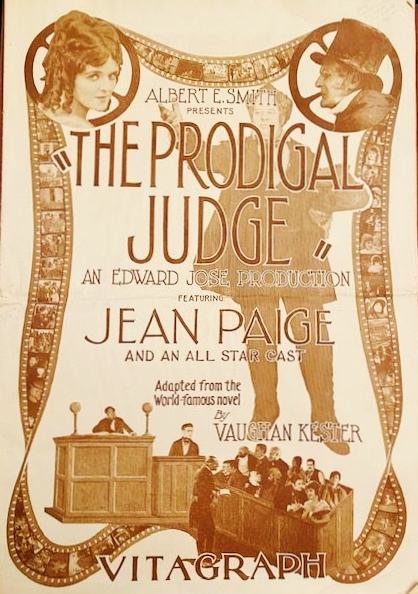
Director's Spotlight: United States
A Deep Dive into the 1922 Vision of Edward José
Deciphering the layers of The Prodigal Judge (1922) reveals a monumental shift in Drama filmmaking spearheaded by Edward José. With its avant-garde structure and atmospheric tension, offering layers of thematic complexity that demand repeated viewing.
In The Prodigal Judge, Edward José pushes the boundaries of conventional narrative. The film's unique approach to its subject matter has sparked endless debates and interpretations among cinephiles and critics alike.
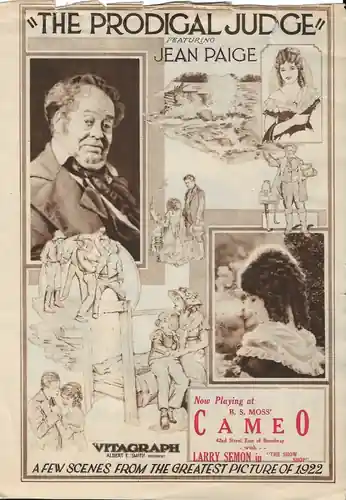
The visual language of The Prodigal Judge is defined by its use of shadows and framing, a hallmark of Edward José's style. By utilizing a 1922-era palette, the film creates an immersive experience that perfectly complements its Drama themes.
| Cinematography | Handheld |
| Soundtrack | Synth-Heavy |
| Editing | Rhythmic |
| Art Direction | Naturalist |
Visualizing the convergence of Edward José's style and the core Drama narrative.
Returning to his estate in North Carolina, Judge Slocum Price, a member of Congress in 1830, finds that his wife has taken their child and eloped with David Gatewood; and the domestic tragedy causes him to become a vagabond. Five years later, the judge and his companion (Solomon Mahaffy) on a Mississippi River boat meet a child known as Hannibal, accompanied by Bob Yancy. The judge suspects Hannibal to be his missing son. Colonel Fentress, an outlaw leader, has the boy kidnapped from Yancy, but Hannibal escapes and takes refuge on a skiff; meanwhile, the judge, who has been arrested for innocently passing counterfeit money, escapes, finds Hannibal on the river, and discovers that actually Fentress was the abductor of his wife. Betty Malroy, a friend of Hannibal's, marries Charley Norton, her childhood sweetheart; but Fentress has him shot on their wedding day. Following the rescue of Betty and Hannibal from Fentress, the judge challenges him to a duel. Solomon schemes to go in the judge's place and is mortally wounded; but the judge arrives and shoots Fentress. The judge regains his fortune, and Betty is won over to the affections of Bruce Carrington, who is trapped with her in the rapids.
Decades after its release, The Prodigal Judge remains a vital piece of the cinematic puzzle. Its influence can be seen in countless modern works, solidifying Edward José's status as a master of the craft in United States and beyond.