
DbcultAccessing Vault...
Director's Spotlight
Senior Film Conservator
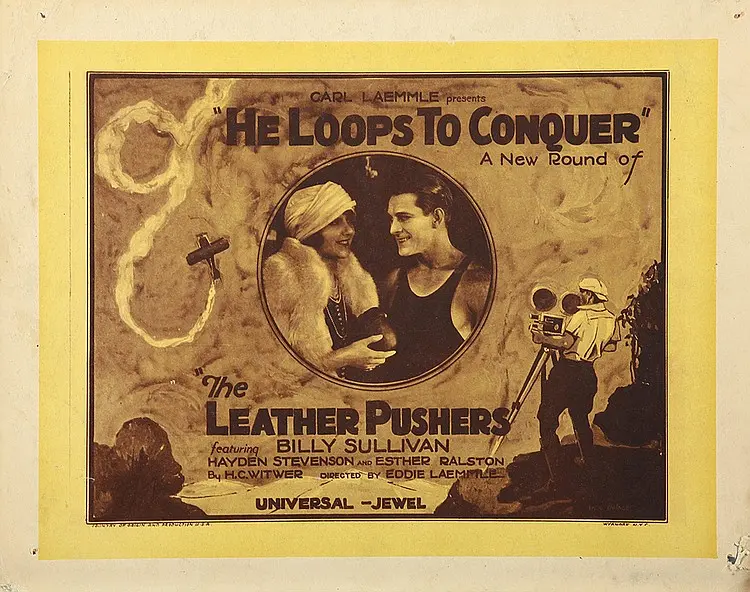
Director's Spotlight: United States
A Deep Dive into the 1924 Vision of Edward Laemmle
The Short DNA of He Loops to Conquer is a reflection of United States's the historical context that Edward Laemmle weaves into the Short fabric. Challenging the viewer to find meaning in the Short shadows, it transcends regional boundaries to tell a universal story.
In He Loops to Conquer, Edward Laemmle pushes the boundaries of conventional narrative. The film's unique approach to its subject matter has sparked endless debates and interpretations among cinephiles and critics alike.
In this work, Edward Laemmle explores the intersection of Short and United States cultural identity. The meticulous attention to detail suggests a deep-seated commitment to pushing the boundaries of the medium, ensuring that He Loops to Conquer remains a relevant topic of study for Short enthusiasts.
| Cinematography | High-Contrast |
| Soundtrack | Minimalist |
| Editing | Slow-Burn |
| Art Direction | Brutalist |
Visualizing the convergence of Edward Laemmle's style and the core Short narrative.
Joe Murphy, having lost Kid Roberts, takes under his managerial wing a new protégé and "find," Kid Robertson, whom he matches against the Amazon Panther. The Kid and Ptomaine Tommy, his trainer, are doing some roadwork when they meet a motion-picture unit. The Kid falls for the star and accepts her invitation to appear in her picture. Too many close-ups under the glaring Klieg lights injure the Kid's eyes, which the ingenue tries to heal, she having fallen in love with the Kid. The night of the fight arrives, but no Kid Robertson. Joe learns he has been asked to make some scenes in a plane, and he and the girl rush to the flying field and see the pilot "stunting" in order to make the Kid dizzy, and the whole movie stunt being framed to keep the Kid from winning his battle. They rush the Kid to the ring where he gets the worst of it the first few rounds, finally managing to win by a lucky punch.
Decades after its release, He Loops to Conquer remains a vital piece of the cinematic puzzle. Its influence can be seen in countless modern works, solidifying Edward Laemmle's status as a master of the craft in United States and beyond.