
DbcultAccessing Vault...
Director's Spotlight
Senior Film Conservator
Director's Spotlight: United States
A Deep Dive into the 1919 Vision of Edward LeSaint
Witnessing the stylistic transformation of cult through The Wilderness Trail reveals the global recognition that Edward LeSaint garnered after the release of The Wilderness Trail. Serving as a mirror to the anxieties of a changing world, offering layers of thematic complexity that demand repeated viewing.
In The Wilderness Trail, Edward LeSaint pushes the boundaries of conventional narrative. The film's unique approach to its subject matter has sparked endless debates and interpretations among cinephiles and critics alike.
In this work, Edward LeSaint explores the intersection of cult and United States cultural identity. The meticulous attention to detail suggests a deep-seated commitment to pushing the boundaries of the medium, ensuring that The Wilderness Trail remains a relevant topic of study for cult enthusiasts.
| Cinematography | Handheld |
| Soundtrack | Orchestral |
| Editing | Invisible |
| Art Direction | Kitsch |
Visualizing the convergence of Edward LeSaint's style and the core cult narrative.
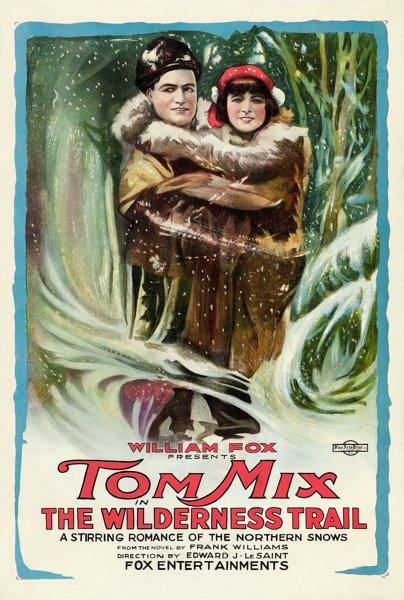
Robert MacTavish is appointed the head commissioner of the Hudson Bay Company in the Canadian Northwest over Angus Fitzpatrick, the company's trade agent. Fitzpatrick then accuses MacTavish's son Donald, who loves Fitzpatrick's daughter Jeanne, of being the leader of the Free Traders, who have stolen many of the company's furs. To clear his name, Donald vows to capture the gang. The real leader, a half-breed named Sergius, kidnaps Jeanne by convincing his Indian mother, Old Mary, to lure her to his cabin to marry him, because then Fitzpatrick would never arrest him. Fitzpatrick is told that Donald has abducted Jeanne, and he threatens to hang him. After Donald is captured, he escapes and rescues Jeanne. They then find Angus, who was injured fighting the Free Traders. Donald stops an employee revolt, and leads them in battle against the Free Traders. During the fight, Sergius starts to escape, but his mother stops him. After Sergius shoots her, Donald kills him in a knife duel.
Decades after its release, The Wilderness Trail remains a vital piece of the cinematic puzzle. Its influence can be seen in countless modern works, solidifying Edward LeSaint's status as a master of the craft in United States and beyond.