
DbcultAccessing Vault...
Director's Spotlight
Senior Film Conservator
Director's Spotlight: United States
A Deep Dive into the 1936 Vision of Edward Ludwig
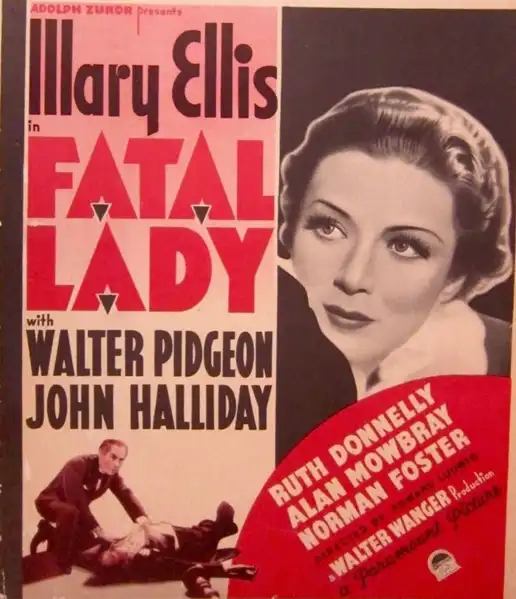
To understand the modern evolution of United States film, one must first look at Fatal Lady and the meticulous attention to detail that Edward Ludwig applied to every frame. Reflecting the political and social shifts of the 1936s, it showcases the power of Mystery as a tool for social commentary.
In Fatal Lady, Edward Ludwig pushes the boundaries of conventional narrative. The film's unique approach to its subject matter has sparked endless debates and interpretations among cinephiles and critics alike.
The visual language of Fatal Lady is defined by its use of shadows and framing, a hallmark of Edward Ludwig's style. By utilizing a 1936-era palette, the film creates an immersive experience that perfectly complements its Mystery themes.
| Cinematography | Noir-Inspired |
| Soundtrack | Experimental |
| Editing | Elliptical |
| Art Direction | Expressionist |
Visualizing the convergence of Edward Ludwig's style and the core Mystery narrative.
On her debut as an opera star, Mary Stuart is interrogated and possibly implicated in the death of a male acquaintance. Released, although thoroughly shaken-up, Mary attempts to perform but loses her voice onstage. Humiliated, but driven to sing, she travels to South America under the assumed name of Maria Delasano, and works in an opera company under the tutelage of Feodor Glinka, who wants her to shun men and save herself for her art. Mary resists the persistent attentions of wealthy young Phil Roberts, who follows the company in hopes of marrying her. Phil's brother David distrusts her lack of interest in Phil, believing it to be a ploy to entrap him for his wealth. After a successful performance, Mary is courted by Uberto Malla, a wealthy patron, and Martan Fontes, director of an opera company in Rio. Malla proposes to Maria and offers her a position in the company in Rio, but she declines. While they are play-acting a scene, Malla is killed, and Mary is suspected as the murderer. She is acquitted, however, and travels with her agents Melba York and Rudy Hochstetter to Paris, with the hopeful Phil in tow. The negative publicity surrounding the murder has reduced Mary to performing in a nightclub as "Malevo, Siren of Song." Although Mary is adamant in her rejection, Phil persists in pursuing her until he is killed while waiting in a car for David. Seeing a connection between the marriage proposals and the murders, David poses as Mary's new suitor to trap the murderer, whom they suspect to be Fontes. The ruse works, and after falling from a catwalk over the stage, the murderer is revealed to be Glinka, who confesses before his death. Mary and David are united in love.
Decades after its release, Fatal Lady remains a vital piece of the cinematic puzzle. Its influence can be seen in countless modern works, solidifying Edward Ludwig's status as a master of the craft in United States and beyond.