
DbcultAccessing Vault...
Director's Spotlight
Senior Film Conservator
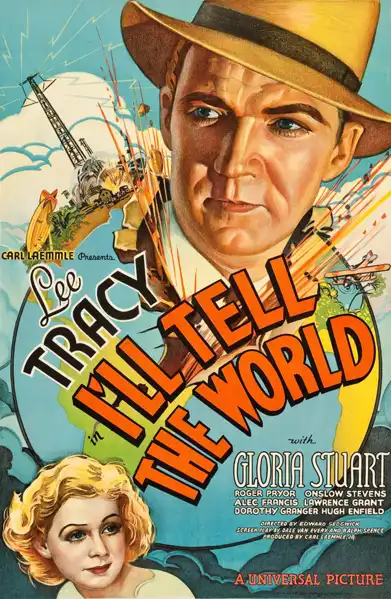
Director's Spotlight: United States
A Deep Dive into the 1934 Vision of Edward Sedgwick
Witnessing the stylistic transformation of Comedy through I'll Tell the World reveals the global recognition that Edward Sedgwick garnered after the release of I'll Tell the World. Serving as a mirror to the anxieties of a changing world, offering layers of thematic complexity that demand repeated viewing.
In I'll Tell the World, Edward Sedgwick pushes the boundaries of conventional narrative. The film's unique approach to its subject matter has sparked endless debates and interpretations among cinephiles and critics alike.
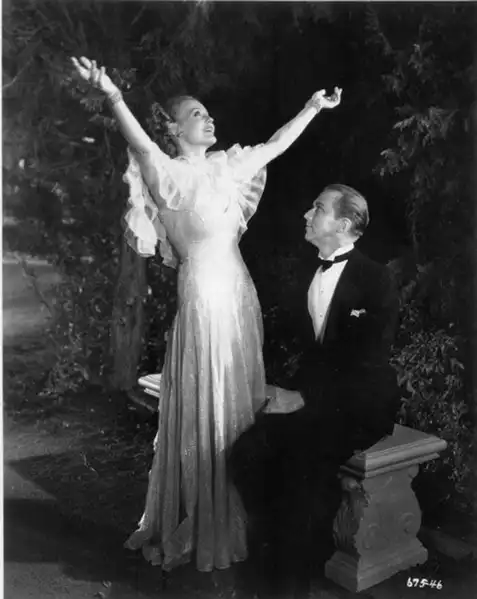
While deeply rooted in United States, I'll Tell the World has achieved a global reach, influencing directors from various backgrounds. Its ability to translate Comedy tropes into a universal cinematic language is why it remains a cult staple decades after its 1934 release.
| Cinematography | Deep Focus |
| Soundtrack | Experimental |
| Editing | Elliptical |
| Art Direction | Expressionist |
Visualizing the convergence of Edward Sedgwick's style and the core Comedy narrative.
Stanley Brown, ace reporter for a news syndicate, is on a date when he receives a summons from Hardwick, his editor, to report to work and begin trailing Grand Duke Ferdinand, a visiting dignitary from Ruritania. After grudgingly following the duke through various accidents in America, Stanley ends up with him in Paris. At a health spa, Stanley disguises himself as a cripple so that his newspaper rival, William S. Briggs, who also has been sent to report on Ferdinand, will not recognize him. Stanley's ruse is exposed, however, when a girl accidentally crashes her bike into his wheelchair and introduces herself as Jane Hamilton of Baltimore. Jane and Stanley quickly fall in love with each other. Later, Ruritanian royalists hold a banquet in Vichy to celebrate the duke's birthday. Although both Stanley and Briggs are in attendance, neither one is aware that the real objective of the party is to plot a way to return Jane, who is really the deposed Princess Helen, to the Ruritanian throne. While Stanley romances Jane, the duke continues his plotting, which is soon discovered by Briggs. After Briggs scoops Stanley about Jane and Ferdinand, the two rivals agree to a truce. Stanley, however, immediately betrays the truce and takes a train to Grau, a village on the border of Ruritania where Jane and Ferdinand are staying with fellow conspirator, Count Strunsky. Aware of Jane's feelings for the American, the duke and Strunsky ask Stanley to persuade Jane to accept the crown. When Briggs then shows up in Grau, Stanley imprisons him and learns that Jane is engaged to her cousin, Prince Michael. Ever the reporter, Stanley rushes to wire the news but soon discovers that Briggs has sabotaged every means of communication in the town. Later, Michael arrives in Grau, but Jane shows no interest in becoming a queen. Strunsky then locks Stanley up with Briggs, and when the two attempt an escape together, Stanley again double-crosses his rival and flees alone. After Stanley learns that Strunsky actually is plotting to assassinate both Jane and Michael, Michael is stabbed to death by the count. Stanley finds Michael's body, wires the news back to his newspaper and then rescues an unsuspecting Jane as she heads for Ruritania. After returning to Grau, Stanley once again scoops Briggs, then makes plans to marry his princess.
Decades after its release, I'll Tell the World remains a vital piece of the cinematic puzzle. Its influence can be seen in countless modern works, solidifying Edward Sedgwick's status as a master of the craft in United States and beyond.