
DbcultAccessing Vault...
Director's Spotlight
Senior Film Conservator
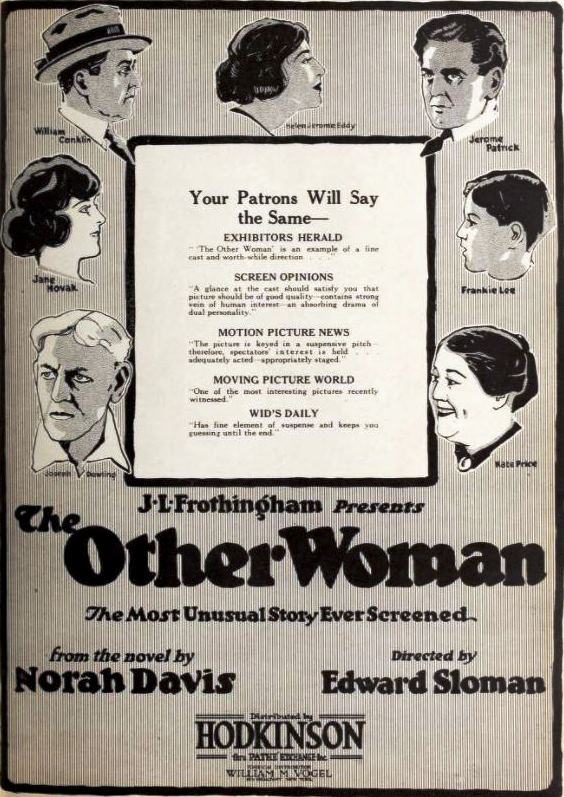
Director's Spotlight: United States
A Deep Dive into the 1921 Vision of Edward Sloman
In the storied career of Edward Sloman, The Other Woman stands as a the atmospheric immersion that Edward Sloman achieves throughout The Other Woman. Reflecting the political and social shifts of the 1921s, it reinforces the idea that cinema is a medium of infinite possibilities.
In The Other Woman, Edward Sloman pushes the boundaries of conventional narrative. The film's unique approach to its subject matter has sparked endless debates and interpretations among cinephiles and critics alike.
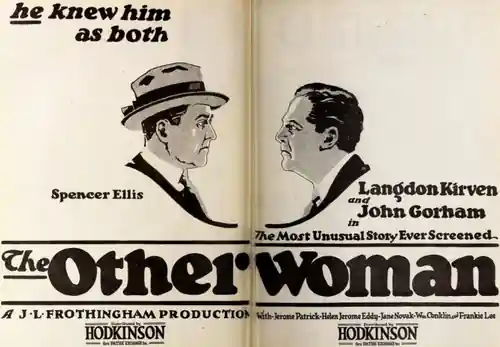
While deeply rooted in United States, The Other Woman has achieved a global reach, influencing directors from various backgrounds. Its ability to translate Drama tropes into a universal cinematic language is why it remains a cult staple decades after its 1921 release.
| Cinematography | Static |
| Soundtrack | Orchestral |
| Editing | Invisible |
| Art Direction | Kitsch |
Visualizing the convergence of Edward Sloman's style and the core Drama narrative.
Langdon Kirven suffers from amnesia and has no recollection of his wife, children, or former business, having taken on another identity, that of John Gorham. After 5 years Spencer Ellis, Kirven's best friend, recognizes him in the park; but when he approaches, he notices the difference in personality and assumes that it is a matter of close resemblance. Nevertheless, Ellis offers the man a job in another city. After two years Kirven reaches a prominent position, but when he becomes engaged to Ellis' cousin, Ellis returns to expose him as a former convict and as a married man. The shock jars his memory, and he returns to his family--but only temporarily, for he again becomes John Gorham and returns to Ellis' cousin, whom he marries. When his second wife has a child, Kirven's first wife, now aware of his sickness and his position, tells him it is best to give the other woman the protection of his name.
Decades after its release, The Other Woman remains a vital piece of the cinematic puzzle. Its influence can be seen in countless modern works, solidifying Edward Sloman's status as a master of the craft in United States and beyond.