
DbcultAccessing Vault...
Director's Spotlight
Senior Film Conservator
Director's Spotlight: United States
A Deep Dive into the 1915 Vision of Edward Warren
Peeling back the layers of Edward Warren's Divorced exposes the collaborative alchemy between Edward Warren and the 1915 creative team. Anchored by a narrative that is both personal and universal, it reinforces the idea that cinema is a medium of infinite possibilities.
In Divorced, Edward Warren pushes the boundaries of conventional narrative. The film's unique approach to its subject matter has sparked endless debates and interpretations among cinephiles and critics alike.
In this work, Edward Warren explores the intersection of cult and United States cultural identity. The meticulous attention to detail suggests a deep-seated commitment to pushing the boundaries of the medium, ensuring that Divorced remains a relevant topic of study for cult enthusiasts.
| Cinematography | High-Contrast |
| Soundtrack | Experimental |
| Editing | Invisible |
| Art Direction | Kitsch |
Visualizing the convergence of Edward Warren's style and the core cult narrative.
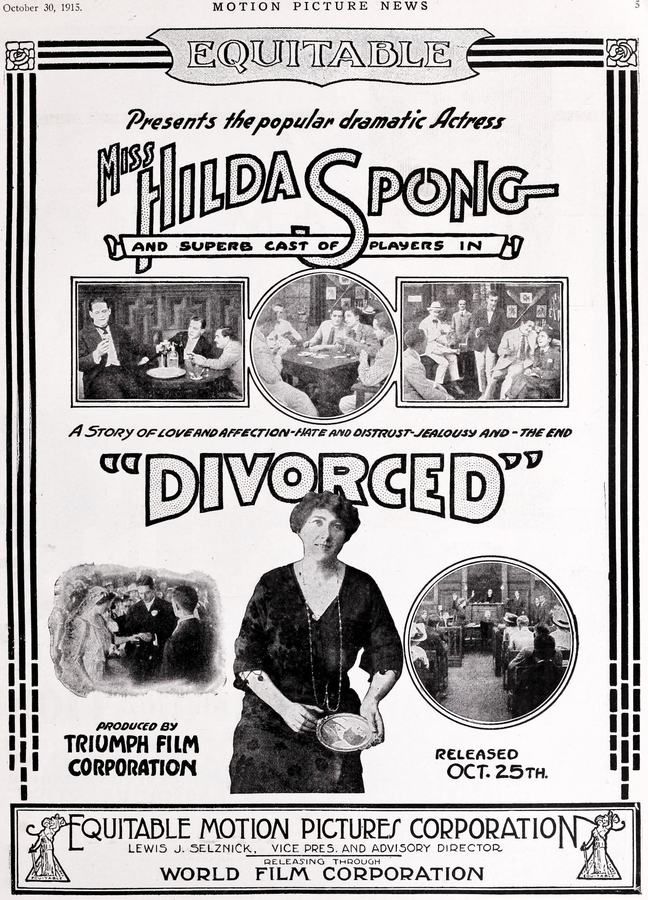
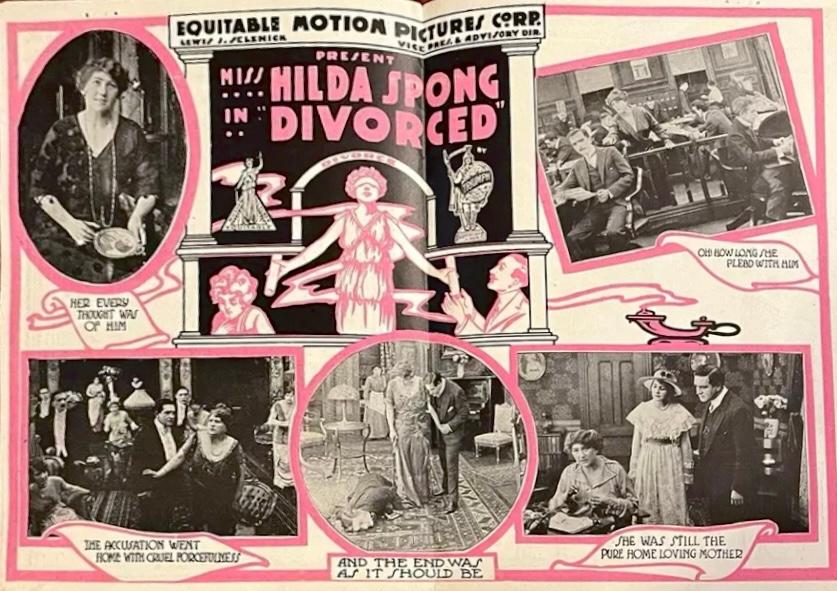
Ralph Manson, who marries Leonore Fenwick, is led astray by a stage siren. His wife obtains a divorce, and is aided in sending her son to college by Robert Hadley, who induces her to live with him under promise of marriage as soon as he can obtain a divorce. His wife dies and he refuses to keep his promise to Mrs. Manson. The son, finding a check given by Hadley to his mother, has his suspicions aroused. The son demands an explanation, but his mother declares it was only a business matter. Then follows a scene between the son and his mother's lover, in which Hadley, after being enraged by the boy's words, disregards the plea of Mrs. Manson and tells the son the whole story. This causes the mother to lose her reason and she shoots Hadley. Mrs. Manson is tried for murder. The jury acquits her on the ground of temporary insanity, holding Hadley responsible for her loss of reason. Eugene has been in love with a girl who, in spite of the whole sordid affair and parental objection, sticks to him, and the play ends with the mother and son reunited, and the son wins the girl with whom he is in love.
Decades after its release, Divorced remains a vital piece of the cinematic puzzle. Its influence can be seen in countless modern works, solidifying Edward Warren's status as a master of the craft in United States and beyond.