
DbcultAccessing Vault...
Director's Spotlight
Senior Film Conservator
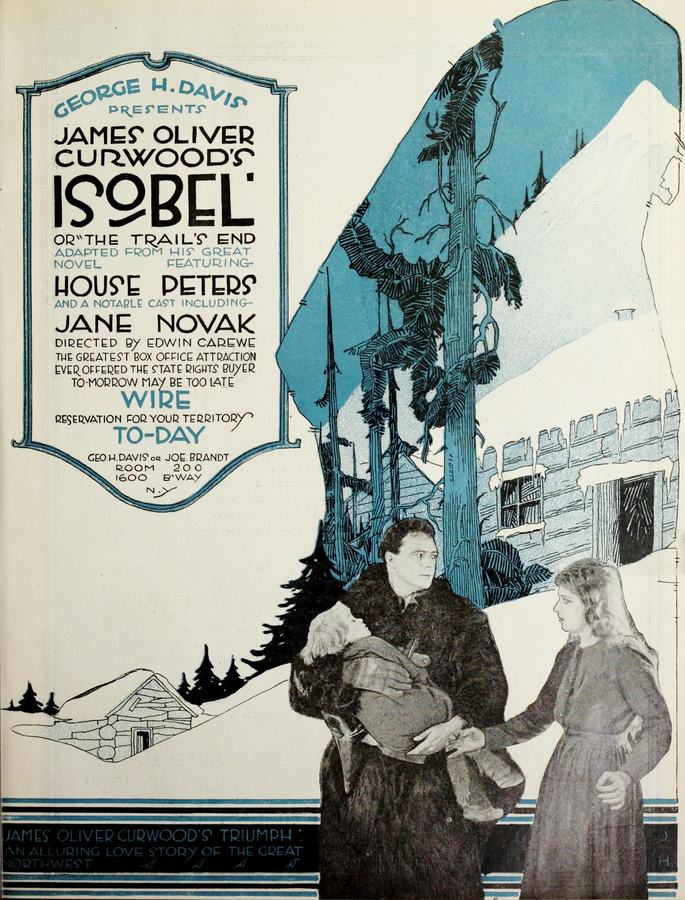
Director's Spotlight: United States
A Deep Dive into the 1920 Vision of Edwin Carewe
Peeling back the layers of Edwin Carewe's Isobel or the Trail's End exposes the collaborative alchemy between Edwin Carewe and the 1920 creative team. Anchored by a narrative that is both personal and universal, it reinforces the idea that cinema is a medium of infinite possibilities.
In Isobel or the Trail's End, Edwin Carewe pushes the boundaries of conventional narrative. The film's unique approach to its subject matter has sparked endless debates and interpretations among cinephiles and critics alike.
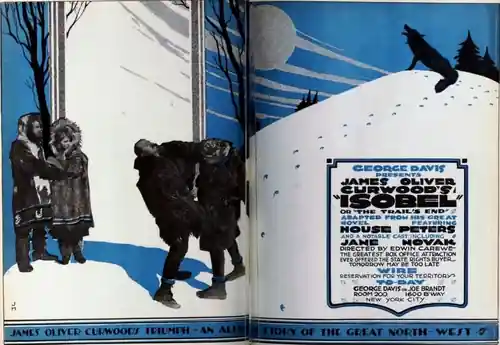
The visual language of Isobel or the Trail's End is defined by its use of shadows and framing, a hallmark of Edwin Carewe's style. By utilizing a 1920-era palette, the film creates an immersive experience that perfectly complements its cult themes.
| Cinematography | Static |
| Soundtrack | Minimalist |
| Editing | Disjunctive |
| Art Direction | Baroque |
Visualizing the convergence of Edwin Carewe's style and the core cult narrative.
In retaliation for an attack on his wife Isobel, Scottie Dean, a passenger on a whaling ship, throws Captain Jim Blake overboard and, believing that he is responsible for the captain's death, flees to the North Woods for safety. Assigned to track Dean down, Sergeant William MacVeigh is closing in on his prey when he meets Isobel drawing a sled that allegedly contains her husband's coffin and, taken by her beauty, he inadvertently allows the couple to escape. An enemy of MacVeigh's, Corporal Bucky Smith, insists that the Sergeant has violated his oath and vows to get Dean himself, forcing MacVeigh to arrest Dean to save Isobel. After he disposes of the Corporal, MacVeigh allows Dean to escape, but later Dean appears at MacVeigh's cabin begging for help for his wife, who is ill in a distant hut. Learning that Blake is not dead, Dean dies and MacVeigh, who is still in love with Isobel, goes to her. Delirious with brain fever, however, she drives him away, accusing him of killing her husband. Years later, after receiving a letter informing him that Isobel has died, MacVeigh travels to Montreal to visit her daughter and there discovers that the woman he loves is alive, and the pair are happily reunited at last.
Decades after its release, Isobel or the Trail's End remains a vital piece of the cinematic puzzle. Its influence can be seen in countless modern works, solidifying Edwin Carewe's status as a master of the craft in United States and beyond.