
DbcultAccessing Vault...
Director's Spotlight
Senior Film Conservator
Director's Spotlight: United States
A Deep Dive into the 1919 Vision of Edwin Carewe
The 1919 release of Shadows of Suspicion marked a significant moment for the stylistic boundaries pushed by Edwin Carewe during the production. In the context of United States's rich cinematic history, it invites us to question our own perceptions of cult narratives.
In Shadows of Suspicion, Edwin Carewe pushes the boundaries of conventional narrative. The film's unique approach to its subject matter has sparked endless debates and interpretations among cinephiles and critics alike.
While deeply rooted in United States, Shadows of Suspicion has achieved a global reach, influencing directors from various backgrounds. Its ability to translate cult tropes into a universal cinematic language is why it remains a cult staple decades after its 1919 release.
| Cinematography | Handheld |
| Soundtrack | Diegetic |
| Editing | Elliptical |
| Art Direction | Expressionist |
Visualizing the convergence of Edwin Carewe's style and the core cult narrative.
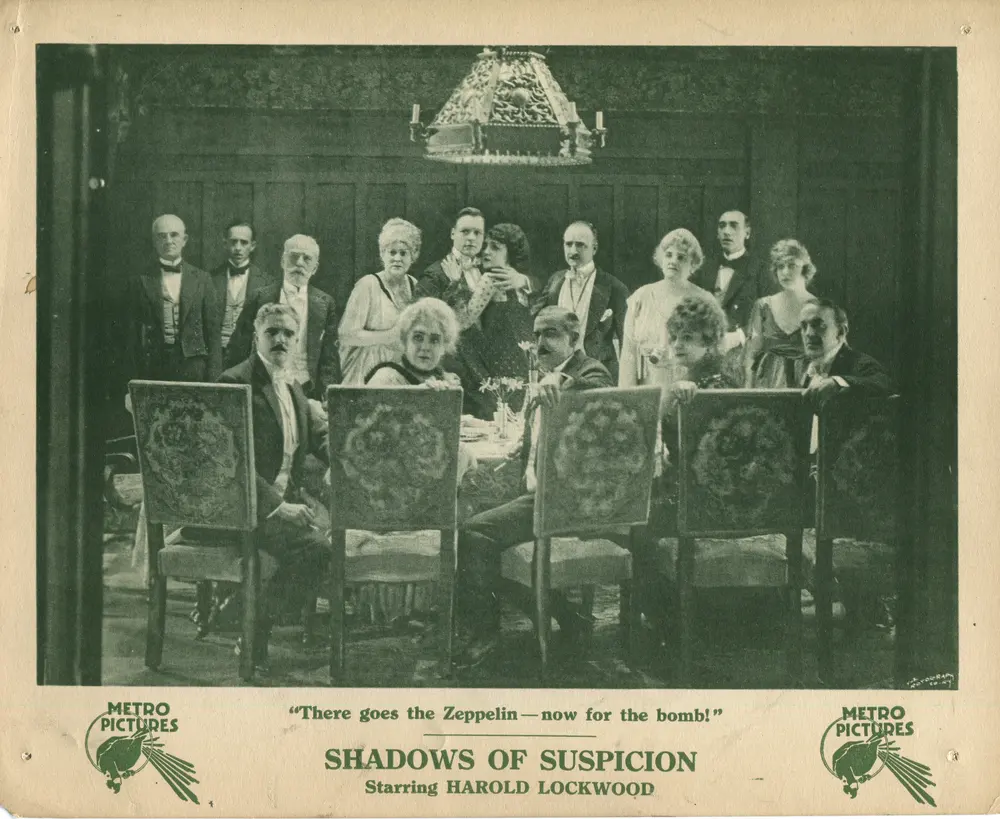
When the Great War begins, English sportsman Cyril Hammersley is thought to be a slacker because he refuses to join the army for pacifistic reasons. His American fiancée, Doris Mathers, knows that he is not a coward, but she questions his patriotism when Sir John Rizzio intimates that Hammersly may be a German spy. During a dinner, Doris sees Captain Walter Byfield of the British War Office pass a cigarette paper packet to Hammersly. After Doris learns that Byfield was shot for spying, Hammersly confesses that he is an agent of the British Secret Service, and gives Doris the packet to hide. When Hammersly is captured and locked in Rizzio's country home, Rizzio visits Doris and sees the packet slip down her stocking to her ankle. After she retrieves it and he grabs it from her, Doris summons Scotland Yard. Rizzio's house is raided, the German spies are captured, Doris releases Hammersly, and the packet, containing an encoded message with plans to blow up London, is recovered.
Decades after its release, Shadows of Suspicion remains a vital piece of the cinematic puzzle. Its influence can be seen in countless modern works, solidifying Edwin Carewe's status as a master of the craft in United States and beyond.