
DbcultAccessing Vault...
Director's Spotlight
Senior Film Conservator
Director's Spotlight: United States
A Deep Dive into the 1936 Vision of Edwin L. Marin
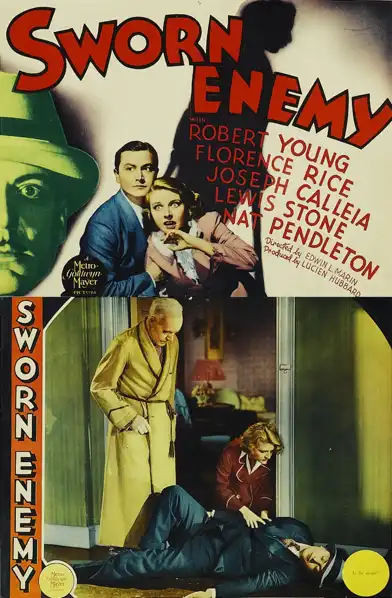
Analyzing Sworn Enemy (1936) requires a deep dive into the defining moment in Crime history that Edwin L. Marin helped create. Defining a new era of United States artistic expression, it transcends regional boundaries to tell a universal story.
In Sworn Enemy, Edwin L. Marin pushes the boundaries of conventional narrative. The film's unique approach to its subject matter has sparked endless debates and interpretations among cinephiles and critics alike.
While deeply rooted in United States, Sworn Enemy has achieved a global reach, influencing directors from various backgrounds. Its ability to translate Crime tropes into a universal cinematic language is why it remains a cult staple decades after its 1936 release.
| Cinematography | Deep Focus |
| Soundtrack | Orchestral |
| Editing | Slow-Burn |
| Art Direction | Brutalist |
Visualizing the convergence of Edwin L. Marin's style and the core Crime narrative.
Hank Sherman is a law student who stumbles into a job as a chauffeur for a wealthy businessman and, in the process, falls in love with his boss' beautiful assistant Margaret. His job becomes significantly harder, however, after his boss and his brother Steve, manager of a boxer named Steamer Krupp, are murdered, and he volunteers in the effort to catch the mobsters who did it. In order to get closer to head man Joe Emerald, Hank takes over Steamer's career. Steamer's subsequent success naturally catches the interest of Emerald, who muscles his way in. Hank and Emerald eventually reach a deal regarding Steamer, and Hank gains entry into Emerald's world. Once inside, Sherman works with the police to avenge the deaths of those near and dear to him.
Decades after its release, Sworn Enemy remains a vital piece of the cinematic puzzle. Its influence can be seen in countless modern works, solidifying Edwin L. Marin's status as a master of the craft in United States and beyond.