
DbcultAccessing Vault...
Director's Spotlight
Senior Film Conservator
Director's Spotlight: United States
A Deep Dive into the 1915 Vision of Edwin Middleton
The enduring fascination with The Flaming Sword is a testament to the defining moment in cult history that Edwin Middleton helped create. This film stands as a masterclass in visual storytelling, it has cemented its place in the global cult cinema archive.
In The Flaming Sword, Edwin Middleton pushes the boundaries of conventional narrative. The film's unique approach to its subject matter has sparked endless debates and interpretations among cinephiles and critics alike.

In this work, Edwin Middleton explores the intersection of cult and United States cultural identity. The meticulous attention to detail suggests a deep-seated commitment to pushing the boundaries of the medium, ensuring that The Flaming Sword remains a relevant topic of study for cult enthusiasts.
| Cinematography | Noir-Inspired |
| Soundtrack | Synth-Heavy |
| Editing | Disjunctive |
| Art Direction | Baroque |
Visualizing the convergence of Edwin Middleton's style and the core cult narrative.
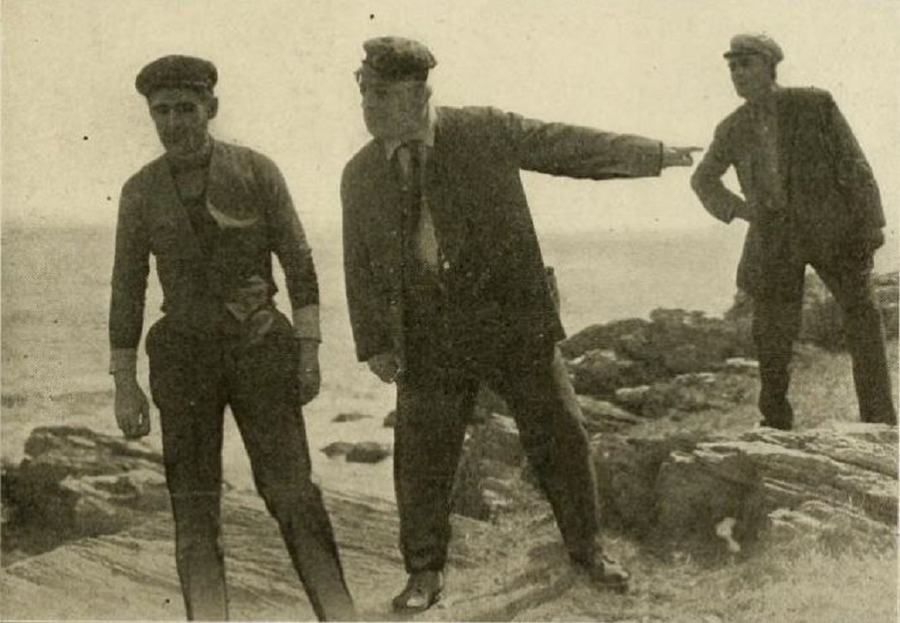
After a life of dissipation, Steve, a young college chap who has been unfortunate in his business career, concludes that life is not worth living and contemplates suicide. Among his associates is a girl named Maisie with whom his name has been coupled by his intimates. Steve gives a banquet and announces that he is bankrupt and that his friends are looking upon him for the last time. After the affair Steve goes to his apartment, puts his affairs in order and slowly walks to the waterfront where he hires a small boat and the last seen of him is his boat, sail set leaving the inlet for the open sea. Maisie, realizing that Steve intends to injure himself, attempts to follow, but is too late. Steve drifts out to sea and after days of misery is washed up on a beach of a small island where he is found by a girl named Meera who lives there with her father and several servants. Meera's father had suffered a great wrong in his early life and took the position as lighthouse keeper on this island where he could live as a hermit and forget his troubles. Meera has never seen anyone except her father and the servants, and to her Steve appeared as a Viking. A strong attachment springs up between the two. Meera's father, who has refused to allow anyone but Government officials to enter the island, takes a liking to Steve and is prevailed upon to allow him to stay there. However, when Calhoun learns that Steve is the son of the man who wronged him, his sentiment takes a different turn. In the meanwhile Maisie learns from a traveling beachcomber that Steve is safe and living with Meera's father on the island. Engaging a boat, she follows him and in her awful rage and jealousy tells Meera's father that Steve is her husband. Calhoun, shouting "Like father, like son," convulsed with anger, falls into an unconscious state and Maisie, realizing that she has caused enough trouble, confesses that she falsely accused Steve. Calhoun recovers and Steve and Meera sail for New York, where the story ends as it should.
Decades after its release, The Flaming Sword remains a vital piece of the cinematic puzzle. Its influence can be seen in countless modern works, solidifying Edwin Middleton's status as a master of the craft in United States and beyond.