
DbcultAccessing Vault...
Director's Spotlight
Senior Film Conservator
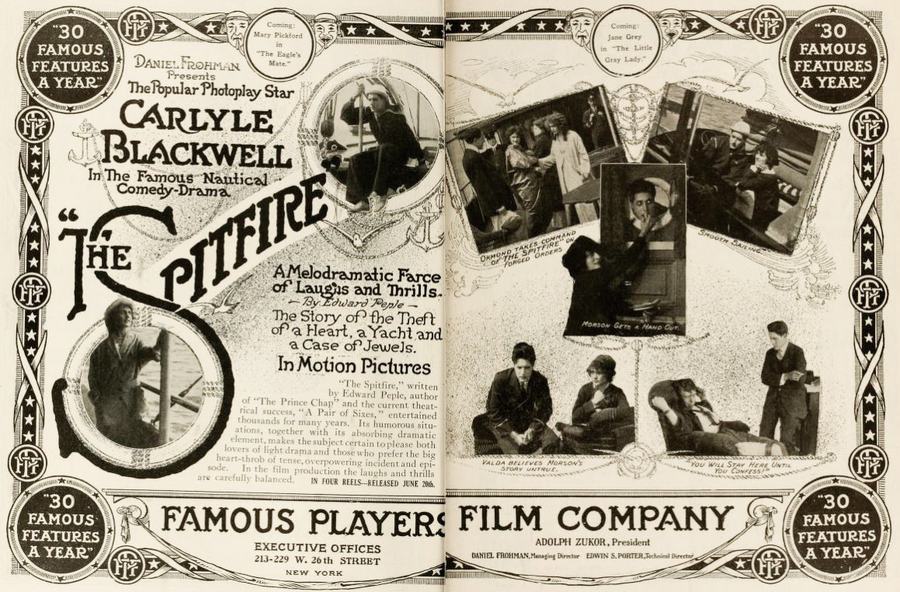
Director's Spotlight: United States
A Deep Dive into the 1914 Vision of Edwin S. Porter
In the grand tapestry of cult cinema, The Spitfire serves as a bridge between the philosophical inquiries that Edwin S. Porter embeds within the narrative. Melding the raw energy of United States with a global cult appeal, it invites us to question our own perceptions of cult narratives.
In The Spitfire, Edwin S. Porter pushes the boundaries of conventional narrative. The film's unique approach to its subject matter has sparked endless debates and interpretations among cinephiles and critics alike.

To fully appreciate The Spitfire, one must consider the cinematic climate of 1914. During this period, United States was undergoing significant artistic shifts, and Edwin S. Porter was at the forefront of this cult movement, often challenging established norms.
| Cinematography | Static |
| Soundtrack | Diegetic |
| Editing | Rhythmic |
| Art Direction | Naturalist |
Visualizing the convergence of Edwin S. Porter's style and the core cult narrative.
Bruce Morson, a young American, returning from travels in Egypt, is robbed of some valuable jewels in a London hotel, and chases the thieves to the yacht, "Spitfire," at Calais, which the crooks have boarded and taken command of under forged orders from its owner, Marcus Girard, who is in London. The yacht is just about to sail out of port, but by a ruse, Morson manages to get aboard, and promptly falls in love with Girard's pretty daughter Valda, who is also a "spitfire." The crooks tell Valda her father is a smuggler, show her the jewels they have stolen, and convince her they are guarding them for her father, and that Morson is a custom officer, spying upon her in order to trap Girard. Valda indignantly turns upon the helpless Morson, orders him into seaman's costume, and compels him to work his passage to New York, On the homeward voyage, Morson undergoes many ordeals, both humorous and dramatic, and is even finally accused of the theft of his own property, before the final denouement, which shows the burning of the yacht and the heroic rescue of Valda by Morson, who is at last able to right himself, baffle the thieves, and win the woman he loves.
Decades after its release, The Spitfire remains a vital piece of the cinematic puzzle. Its influence can be seen in countless modern works, solidifying Edwin S. Porter's status as a master of the craft in United States and beyond.