
DbcultAccessing Vault...
Director's Spotlight
Senior Film Conservator
Director's Spotlight: United States
A Deep Dive into the 1915 Vision of E.H. Calvert
The 1915 release of The Crimson Wing marked a significant moment for the enduring legacy of E.H. Calvert's artistic contribution to the genre. By challenging the status quo of 1915 cinema, it has cemented its place in the global cult cinema archive.
In The Crimson Wing, E.H. Calvert pushes the boundaries of conventional narrative. The film's unique approach to its subject matter has sparked endless debates and interpretations among cinephiles and critics alike.
While deeply rooted in United States, The Crimson Wing has achieved a global reach, influencing directors from various backgrounds. Its ability to translate cult tropes into a universal cinematic language is why it remains a cult staple decades after its 1915 release.
| Cinematography | Handheld |
| Soundtrack | Experimental |
| Editing | Invisible |
| Art Direction | Kitsch |
Visualizing the convergence of E.H. Calvert's style and the core cult narrative.
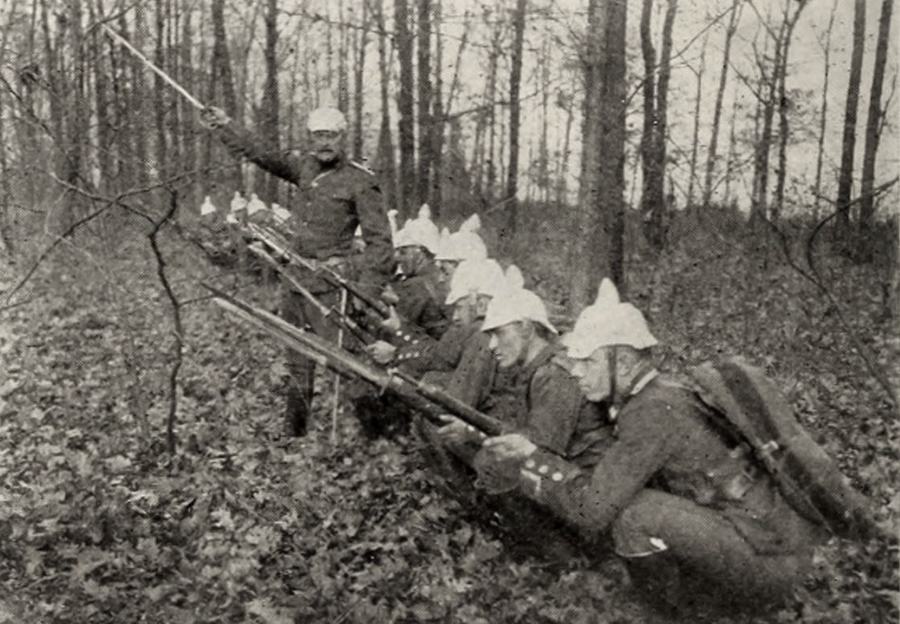
Count Ludwig von Leun-Walram, a German army officer, meets Marguerite Clairon, an actress, while at a watering place on the border line of France. She falls in love with him and reveals her feelings. He rejects her in such a kindly way that she only loves him the more. Later, the count meets Marcelle de Lembach, daughter of a French general, whom he had known in childhood. He falls deeply in love with her. While he is still courting her, however, war breaks out between Germany and France and he is called back to his command. Marcelle is intensely patriotic and goes to the front with her father. She leads a troop of soldiers against a German scouting party when the officer is killed. She is captured by the count, who sends her safely back to the French lines. Paul D'Arblay, a spy, is one of the suitors of Mlle. Clairon, whom she hates. He swears that he will get her into his power. She joins the French army as a Red Cross nurse. On the battlefield she finds the count wounded and nurses him until he is almost recovered. She then arranges to send him back to his command. Arblay discovers this and threatens to denounce the count as a spy unless she yields to his wishes. She consents in order to save the count, promising to meet him at the home of her aunt nearby. He goes there that evening and finds her dead. She has kept her promise, but takes poison rather than submit to him. The count meets Marcelle after the war is over and they are betrothed.
Decades after its release, The Crimson Wing remains a vital piece of the cinematic puzzle. Its influence can be seen in countless modern works, solidifying E.H. Calvert's status as a master of the craft in United States and beyond.